Gold Coast Concrete Grinding & Floor Finishing Experts
Polished Concrete • Epoxy Flake • Honed & Sealed Surfaces
Book a quote
- Gold Coast QLD, Australia
- +61-403093740
- brendan@grinditfloors.com.au
- Mon-Fri - 08:00-19:00
Services
Concrete Grinding, Polishing & Epoxy Floor Services Grind It is a family owned and operated concrete flooring business based on the northern Gold Coast. We work on homes and commercial spaces across the Gold Coast, Brisbane and Northern NSW. Whether you want a glossy polished floor inside, a hard-wearing garage floor or a non-slip finish around the pool, we'll talk you through the options and give you an honest, free quote.
Burnished, Surface Polished Concrete
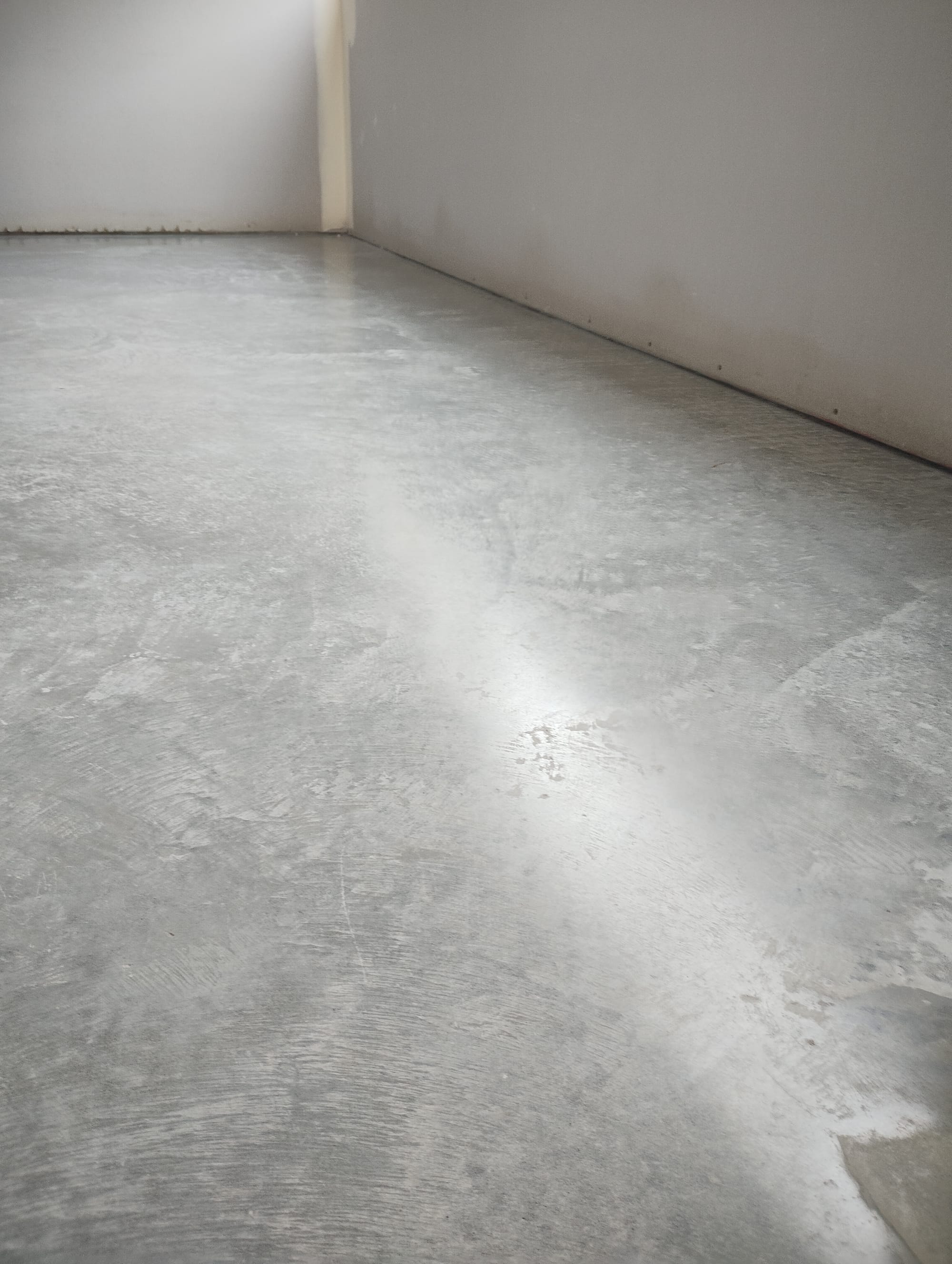
Trowled Finish Overlay
Floor Preparation
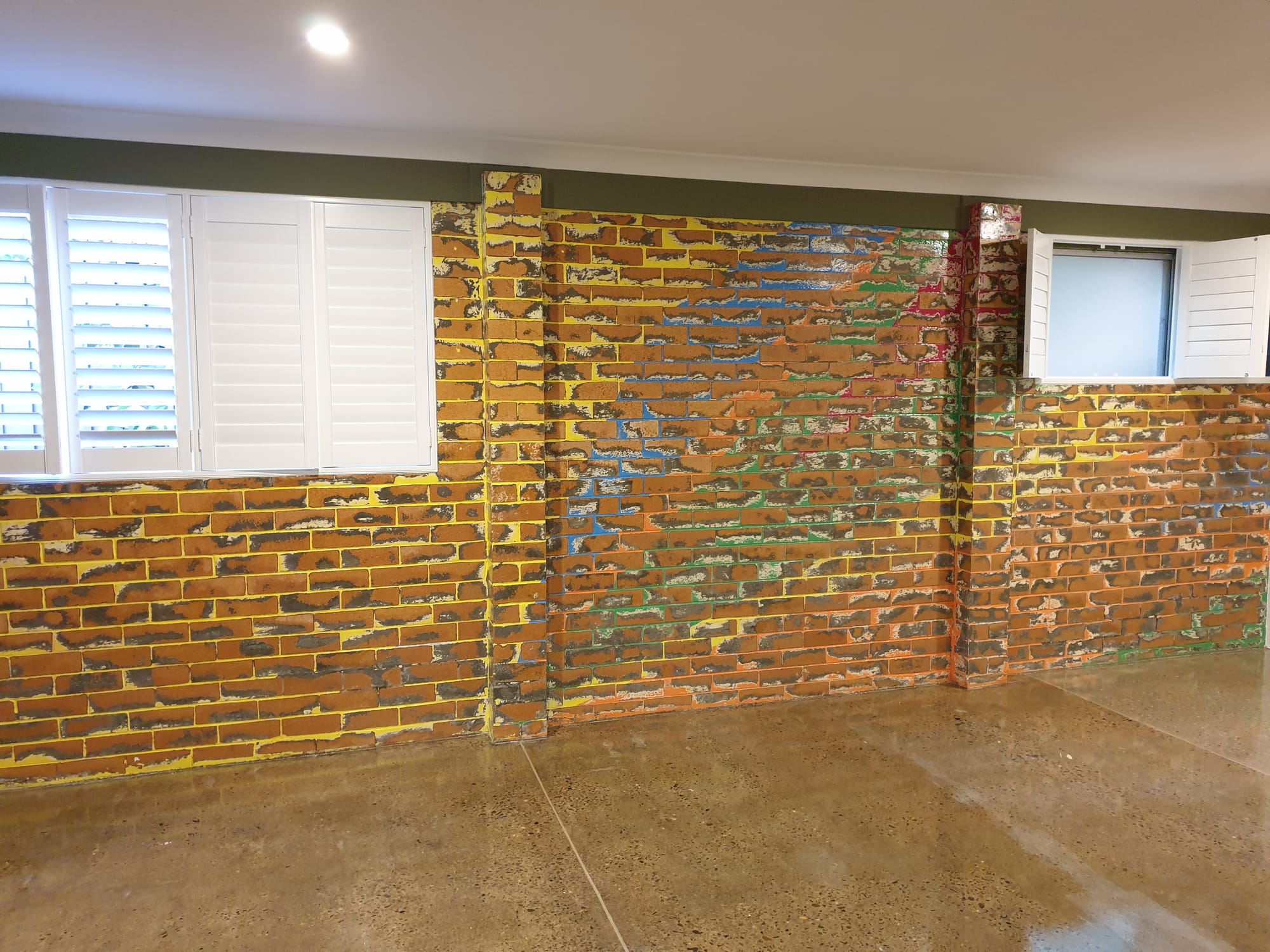
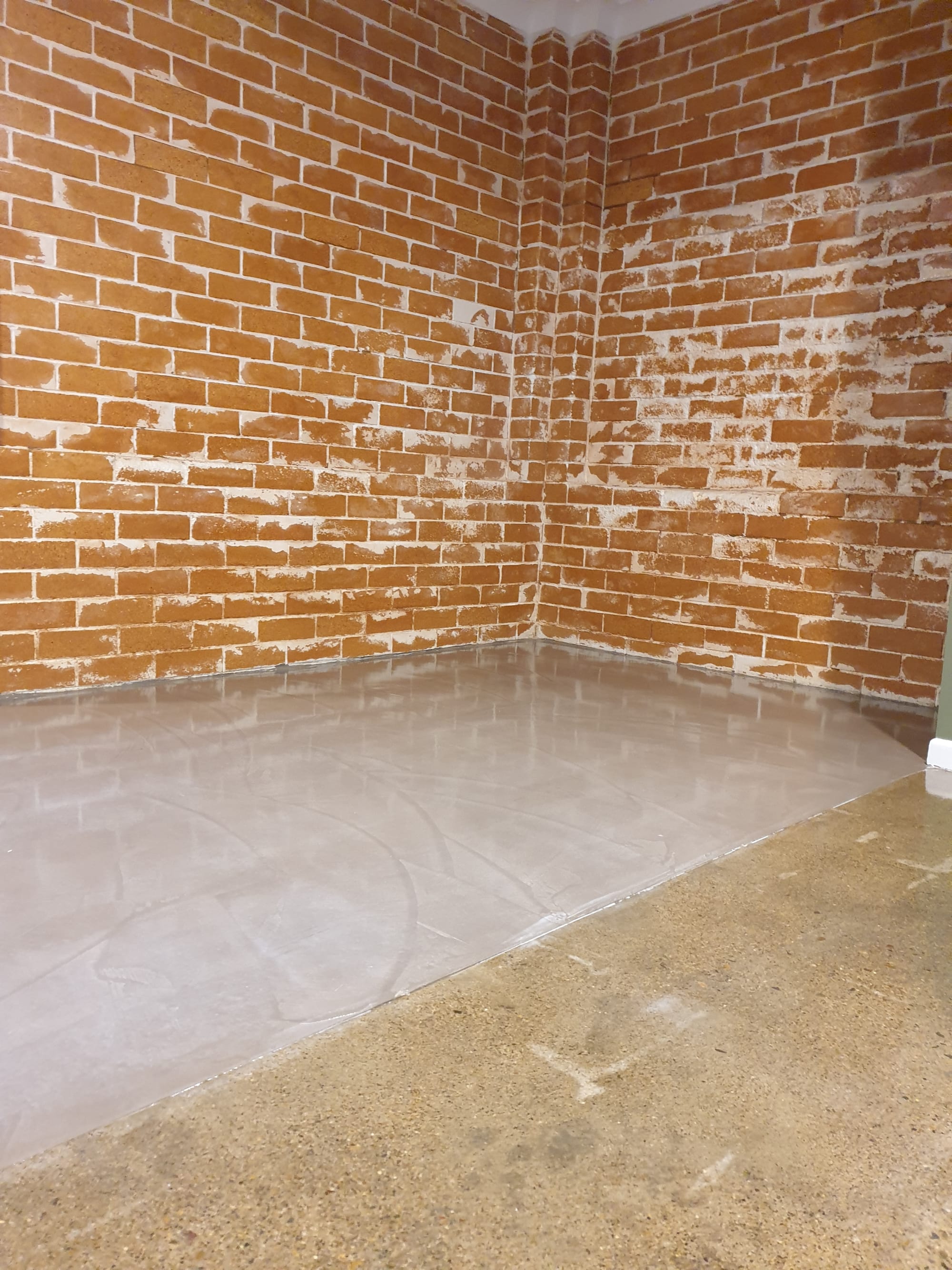
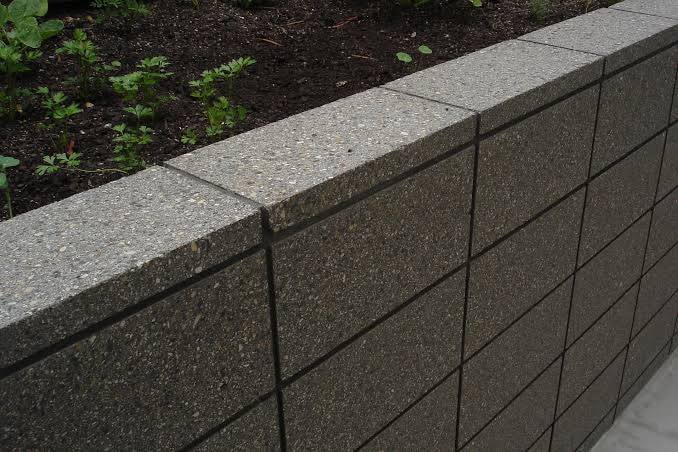
Concrete Wall, Block and Brick Grinding and Sealing
Mechanically Polished Concrete
Mechanically Polished Concrete Floors – Gold Coast, Brisbane & Northern NSW
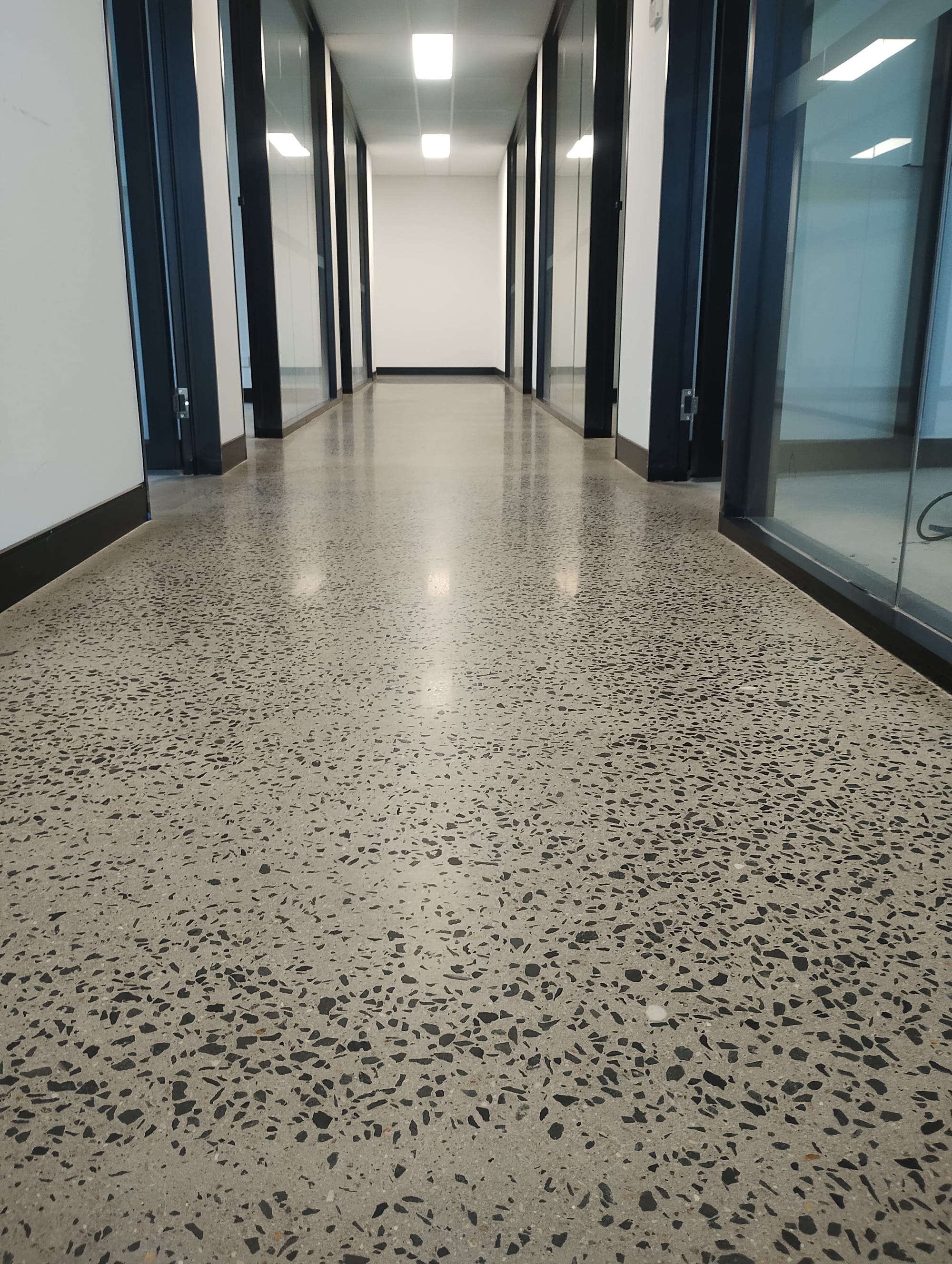
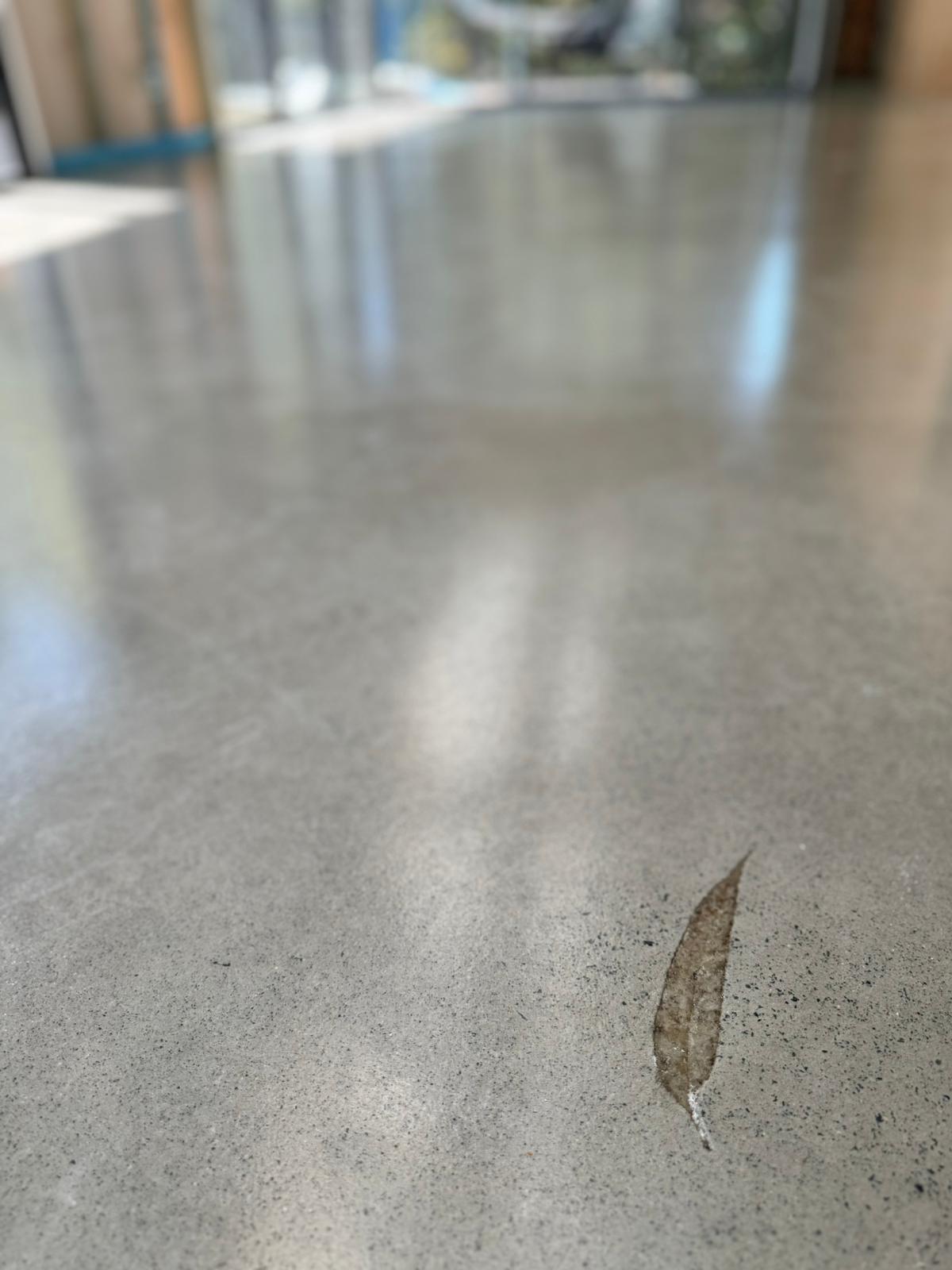
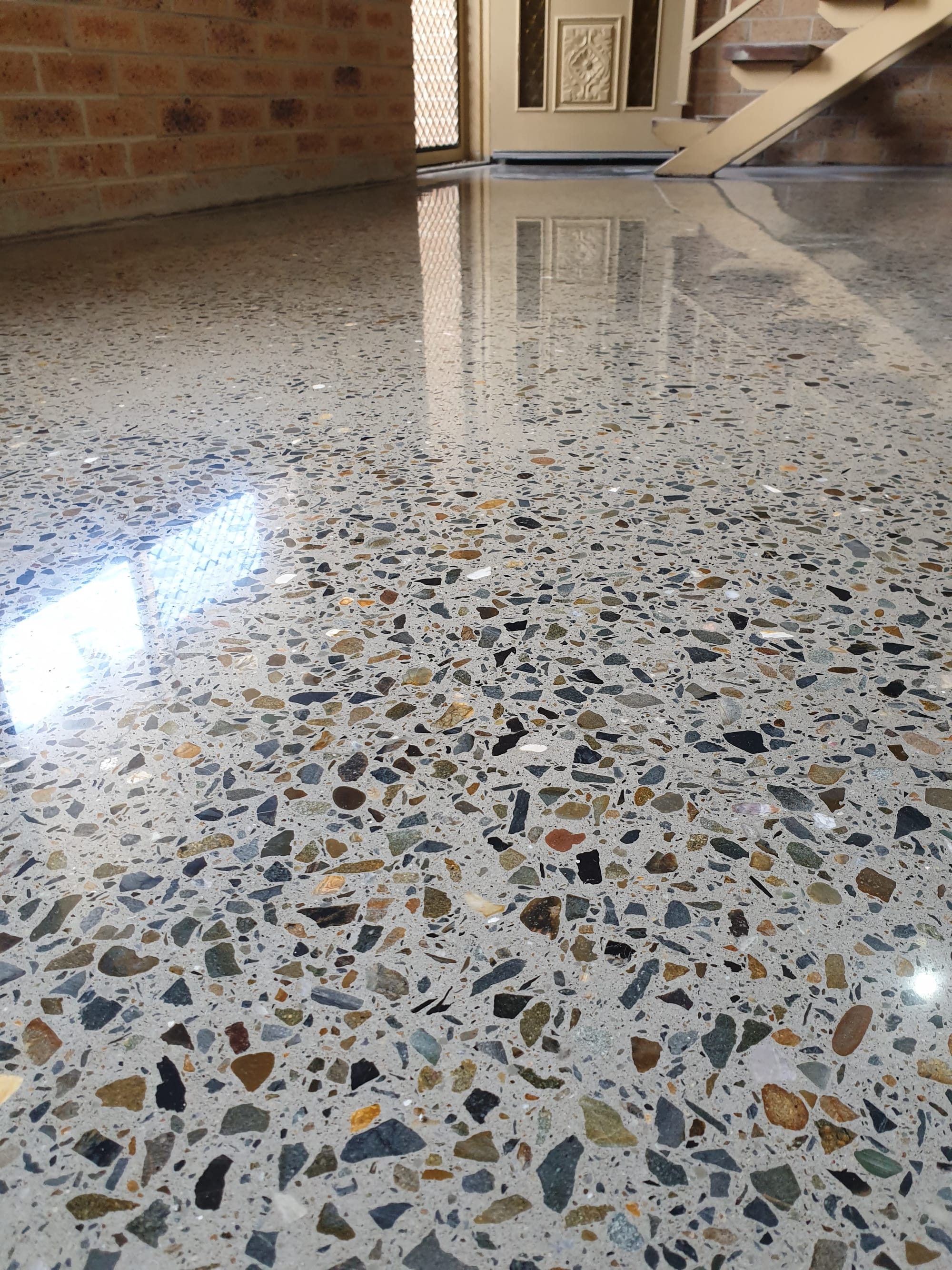
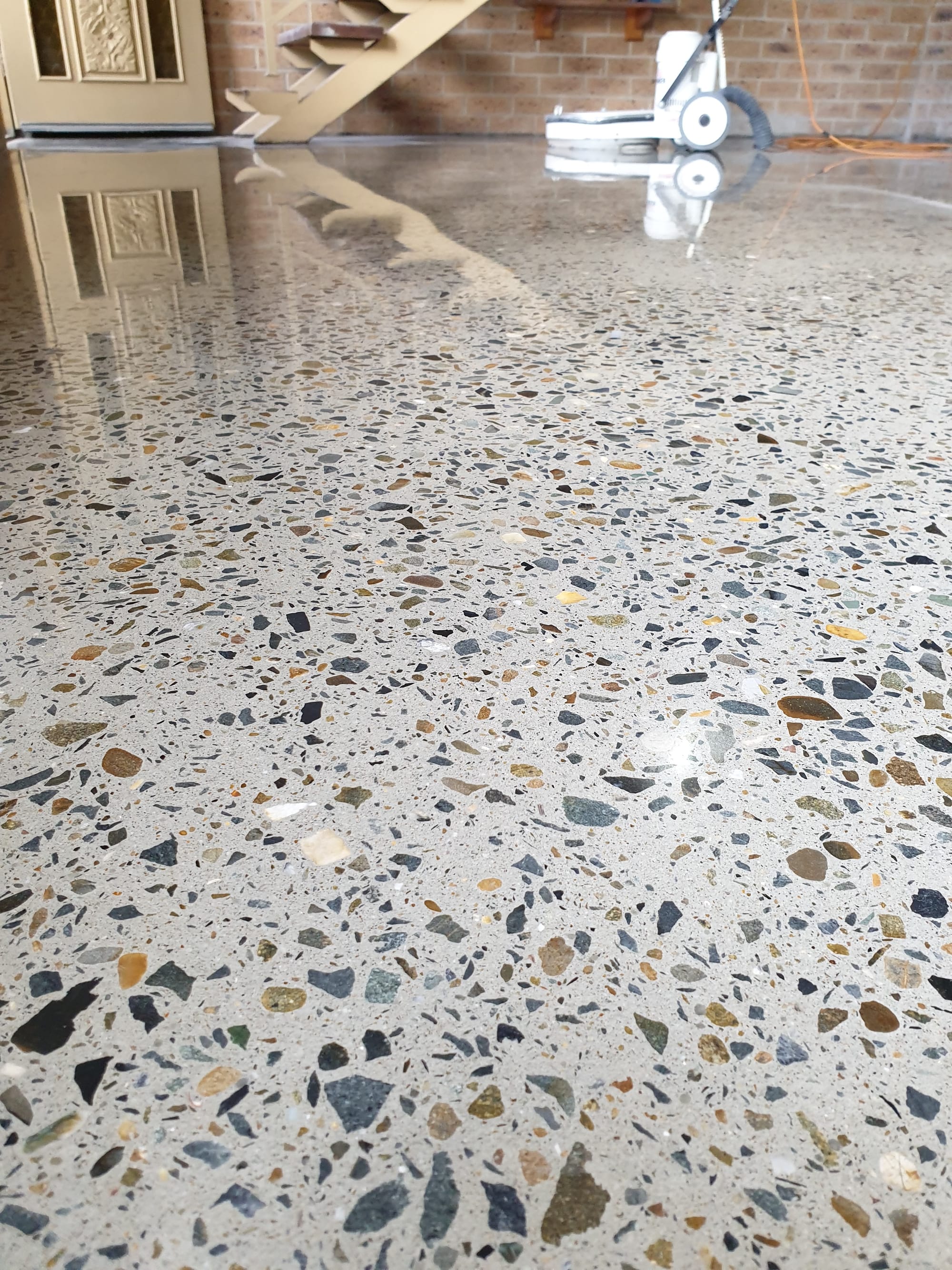
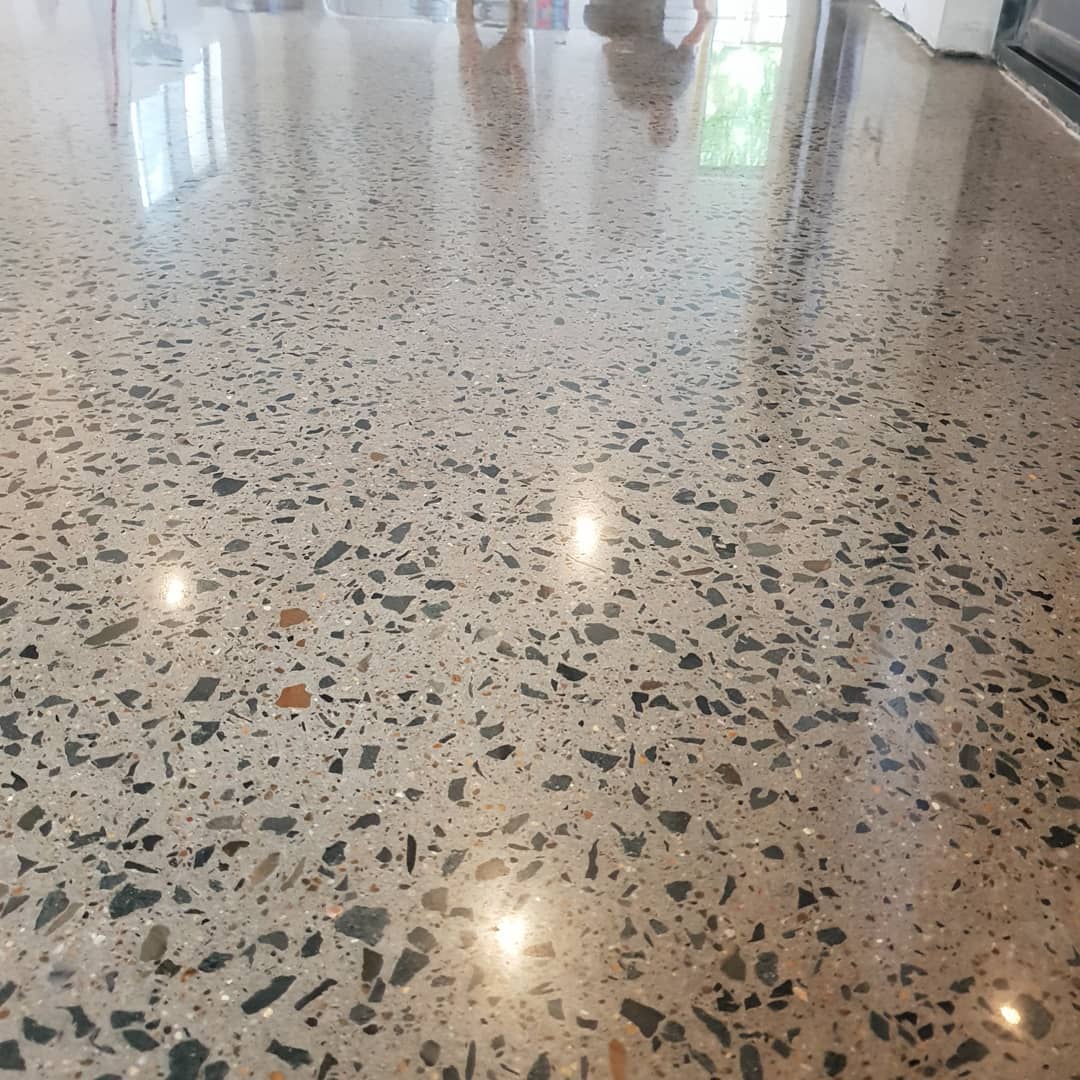
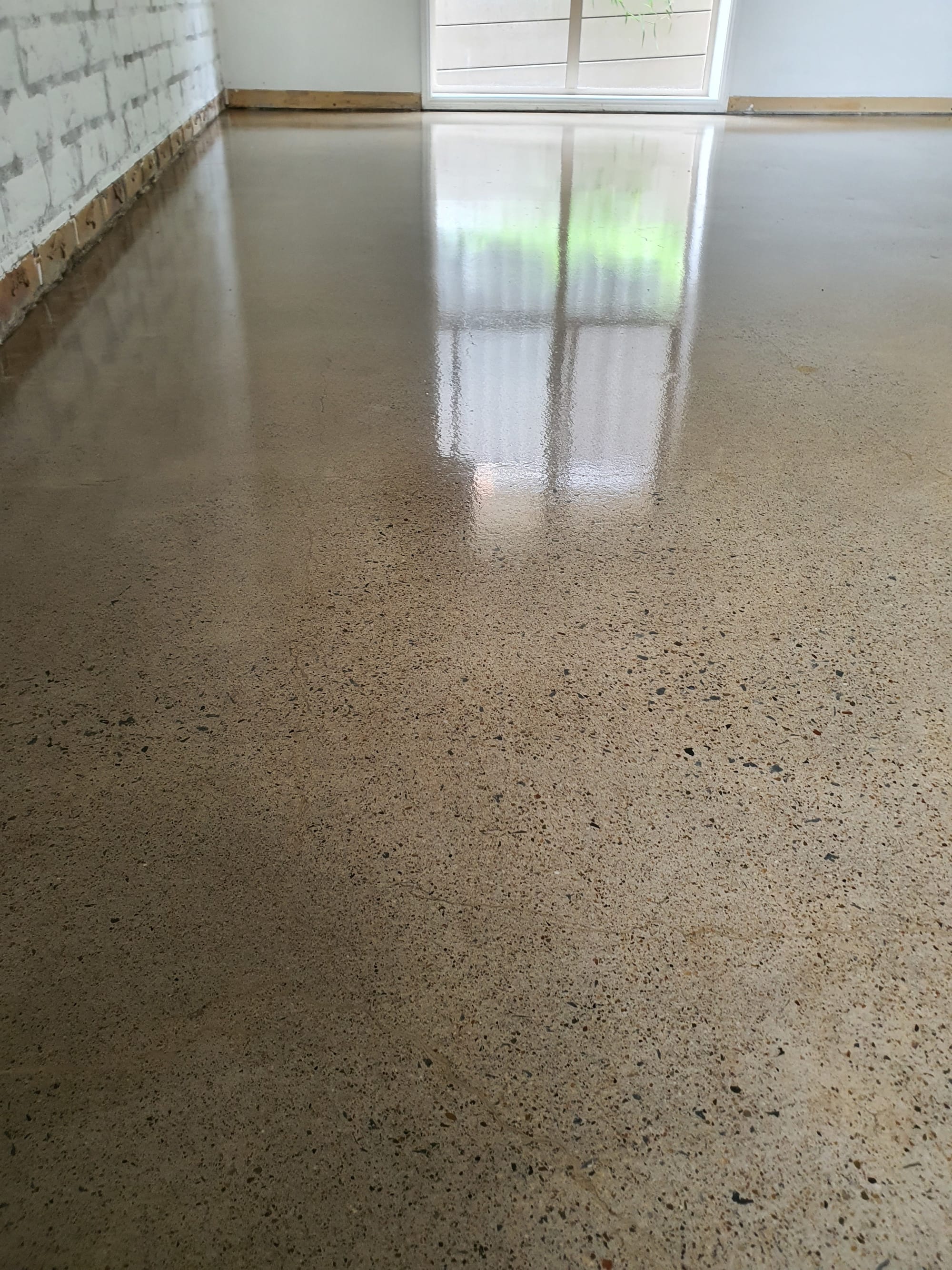
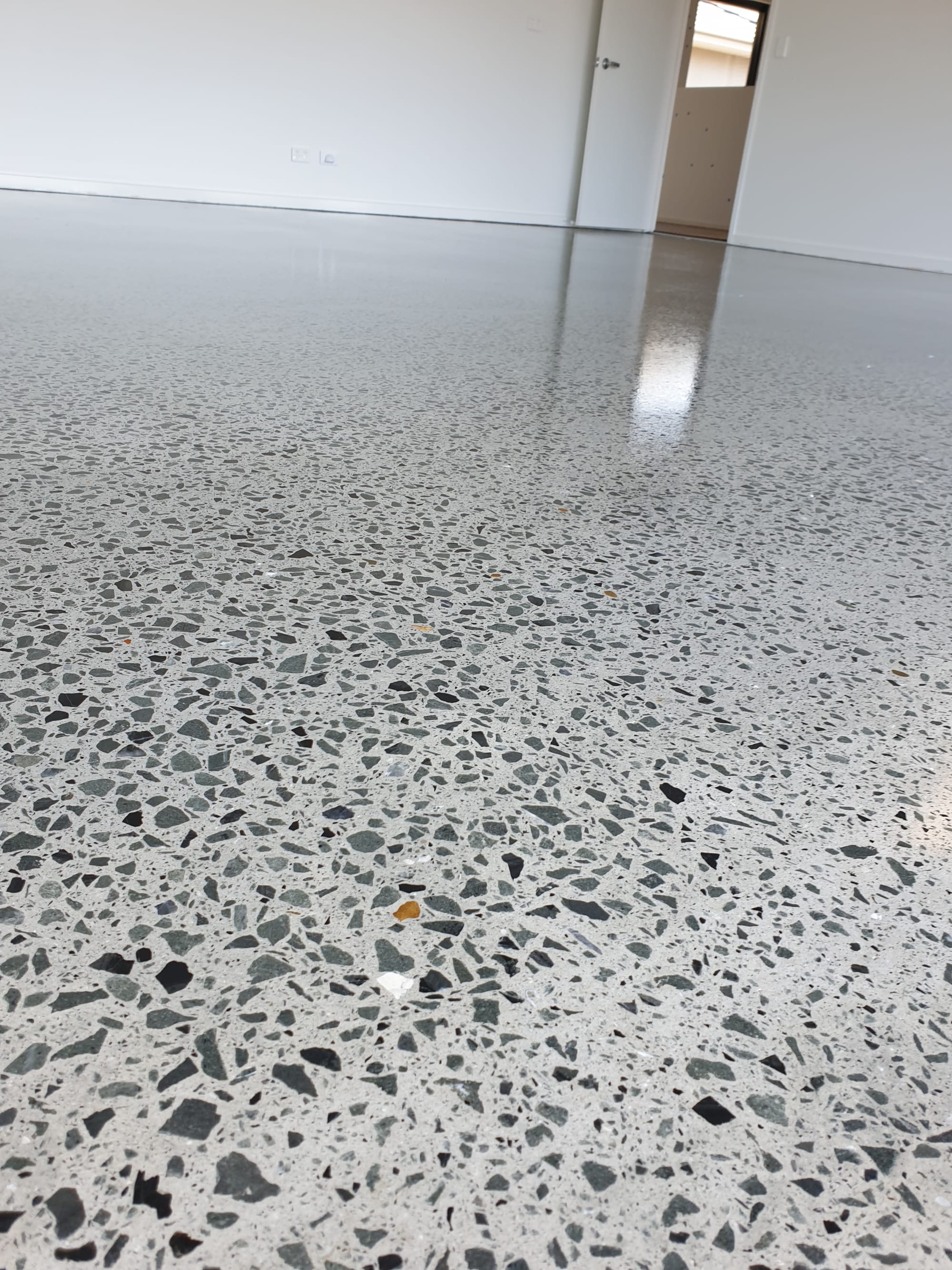
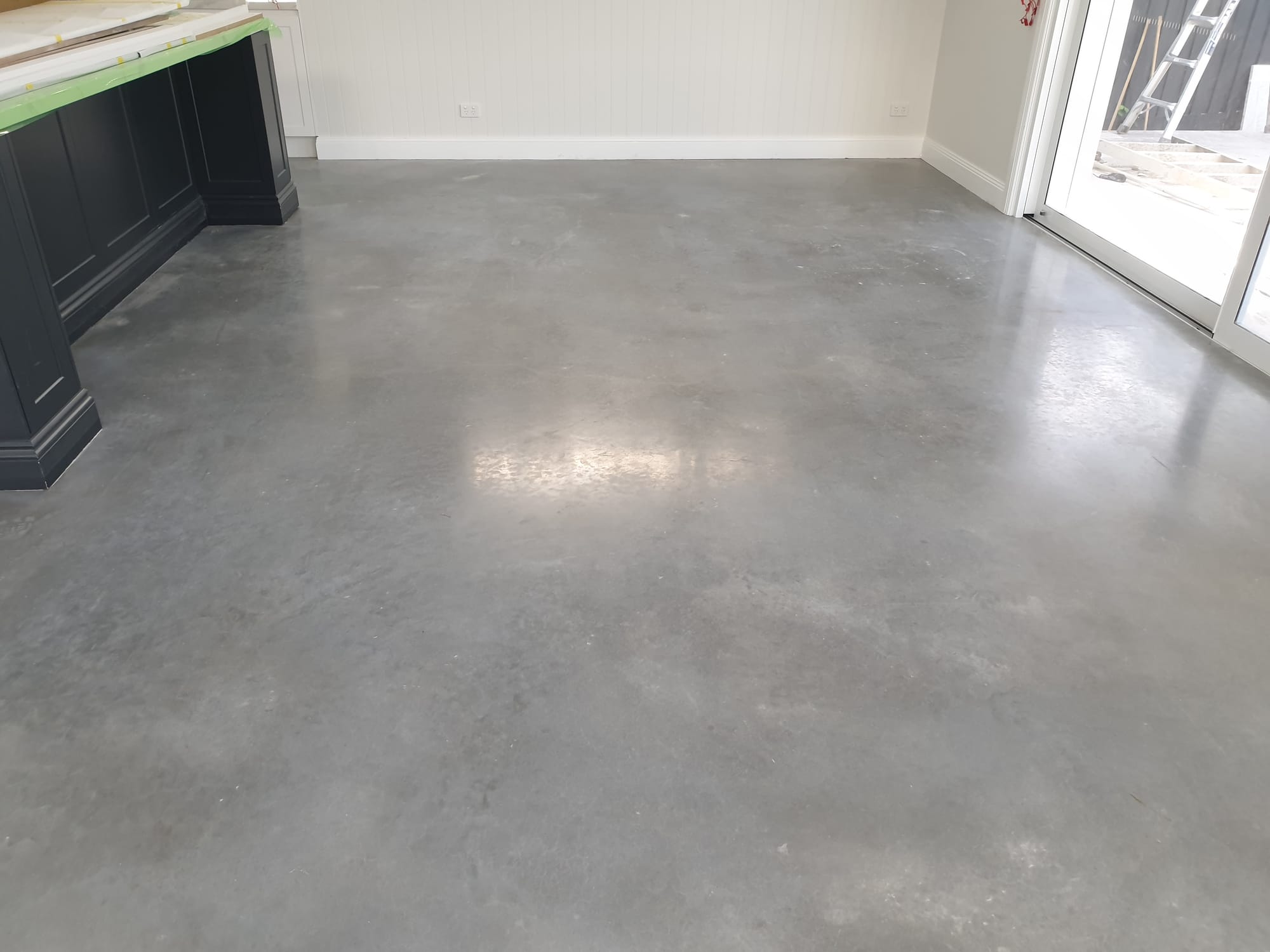
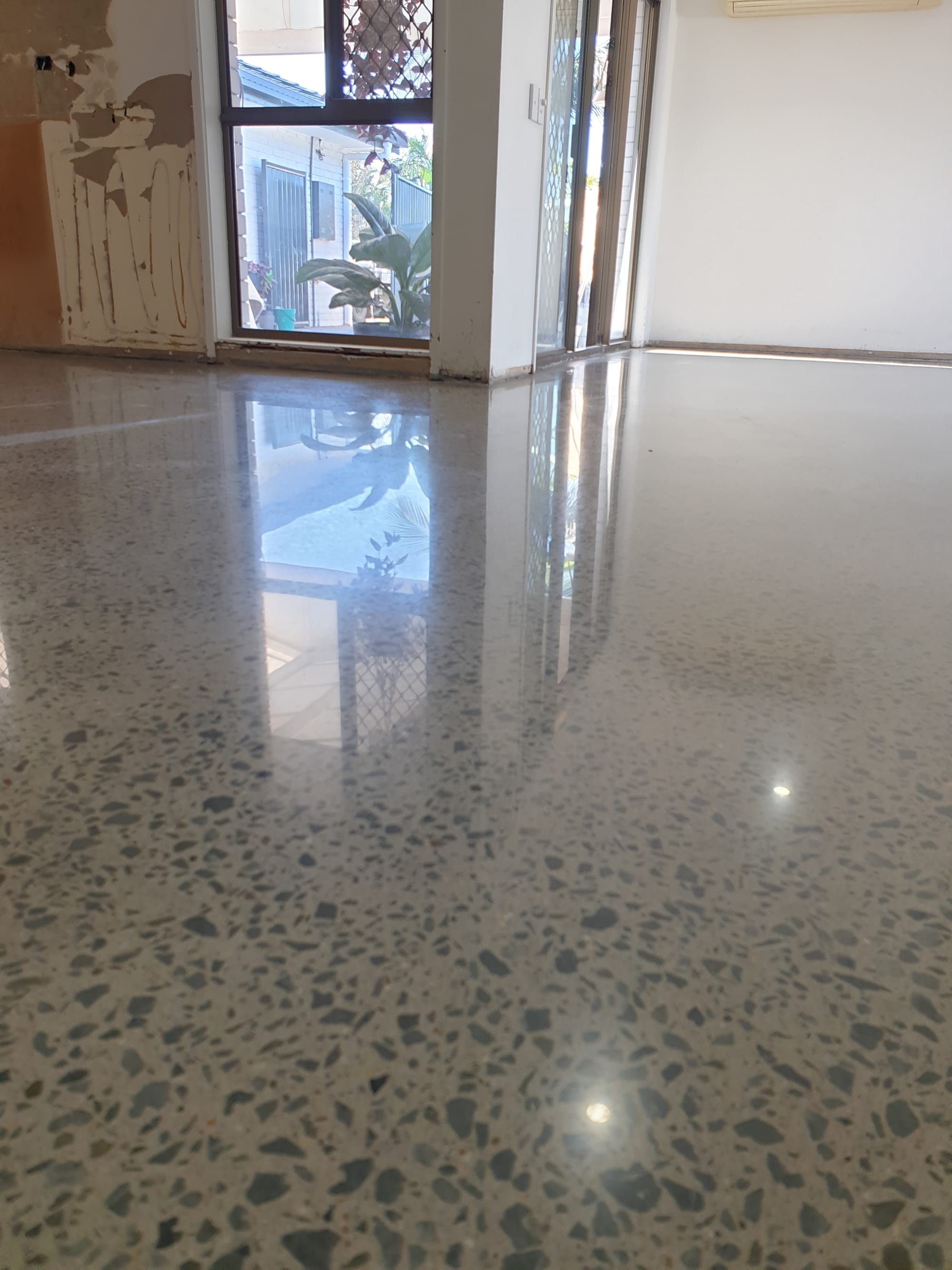
Mechanically polished concrete is the real deal – the shine comes from the concrete itself, not a coating sitting on top. The result is a hard-wearing, easy-care floor with the look of stone. Grind It is based on the northern Gold Coast and polishes floors for homes and businesses across the Gold Coast, Brisbane and Northern NSW.
What is mechanically polished concrete?
Polishing concrete is a lot like sanding timber, just with much heavier machinery. We grind with coarse diamonds to expose as much (or as little) stone as you want, apply a liquid hardener (densifier) that hardens the concrete from the inside, then polish through progressively finer grits to your chosen sheen. With no thick topcoat, there's nothing to peel or flake off – that's the big difference from grind and seal.
Where does it suit?
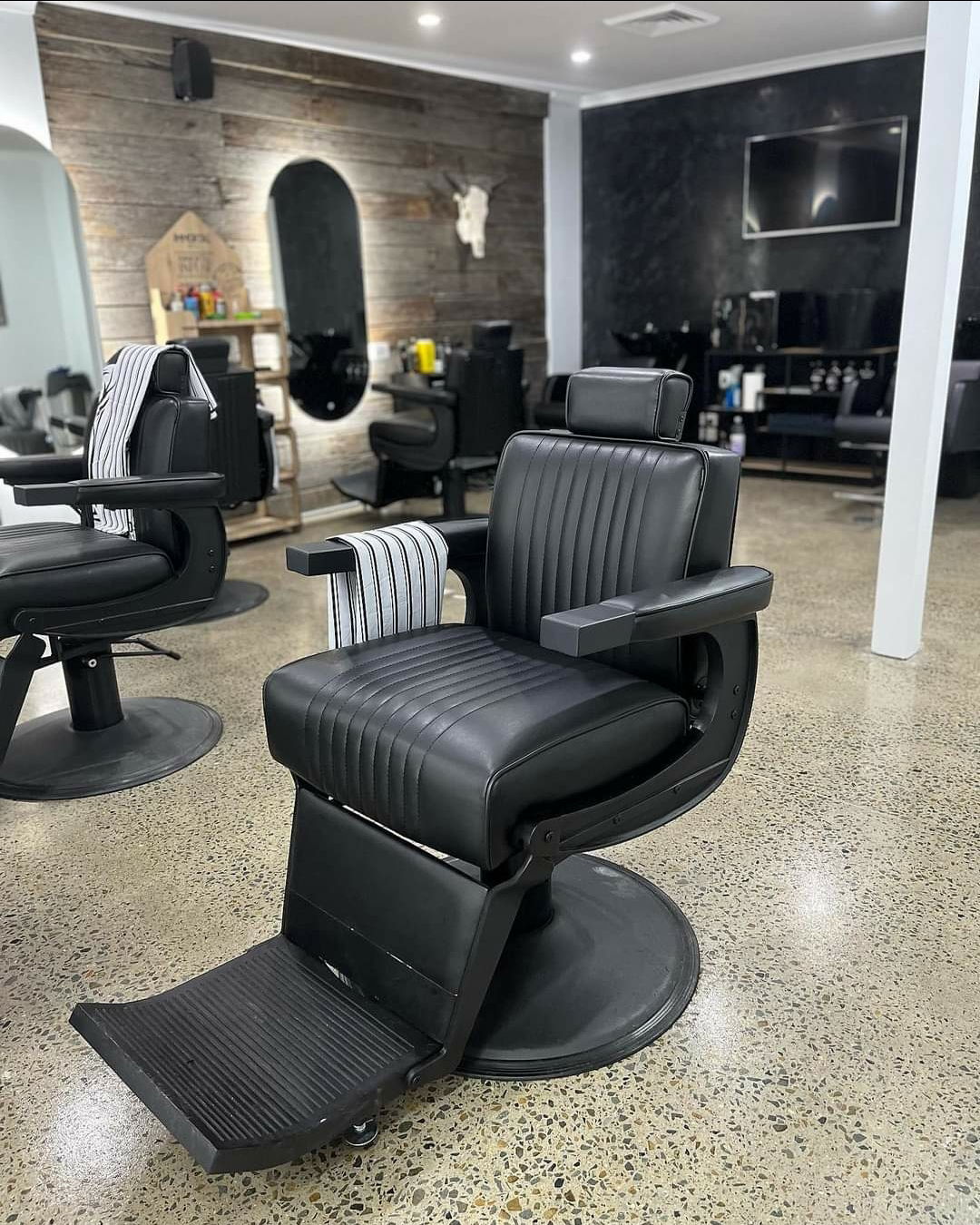
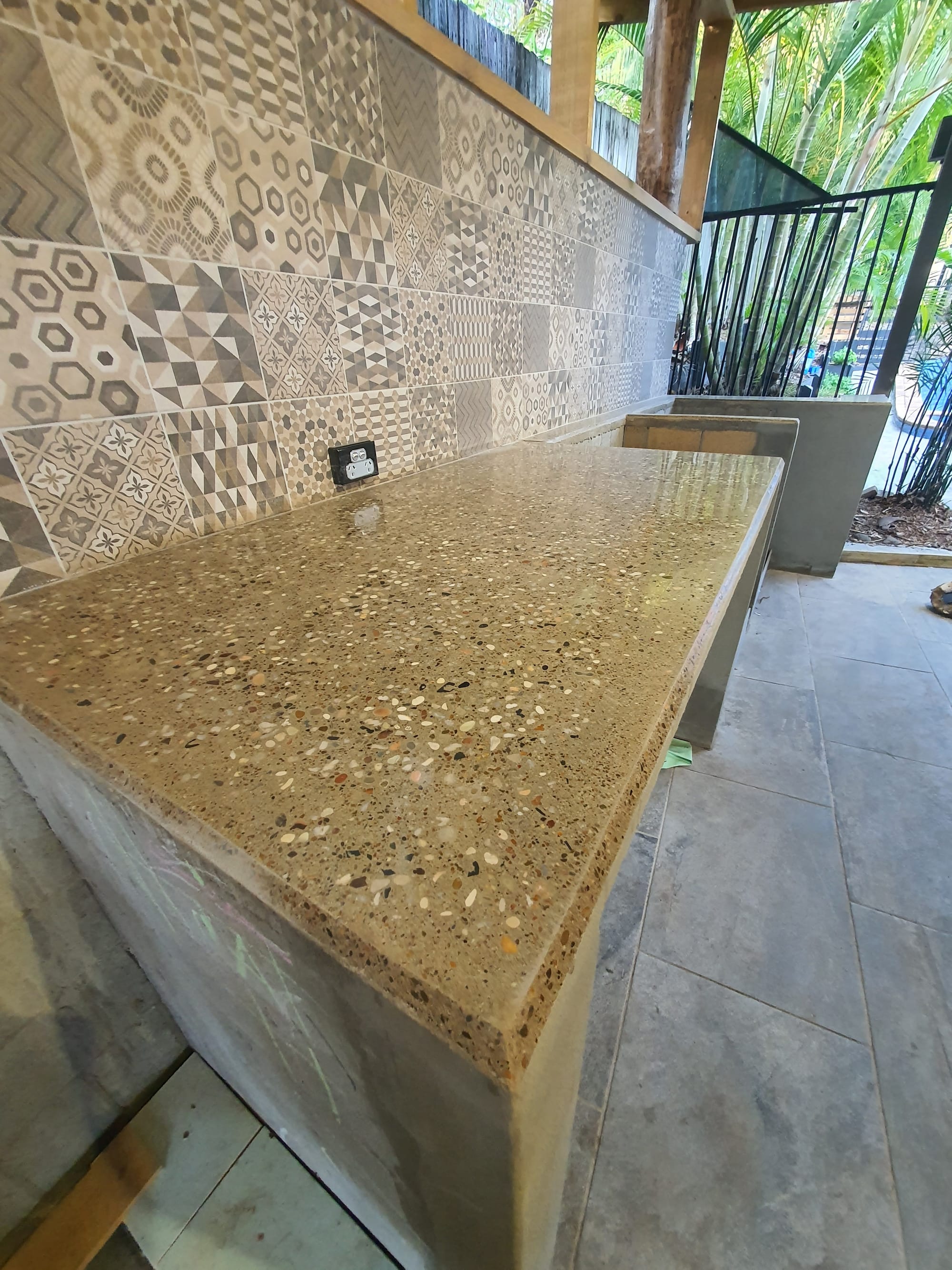
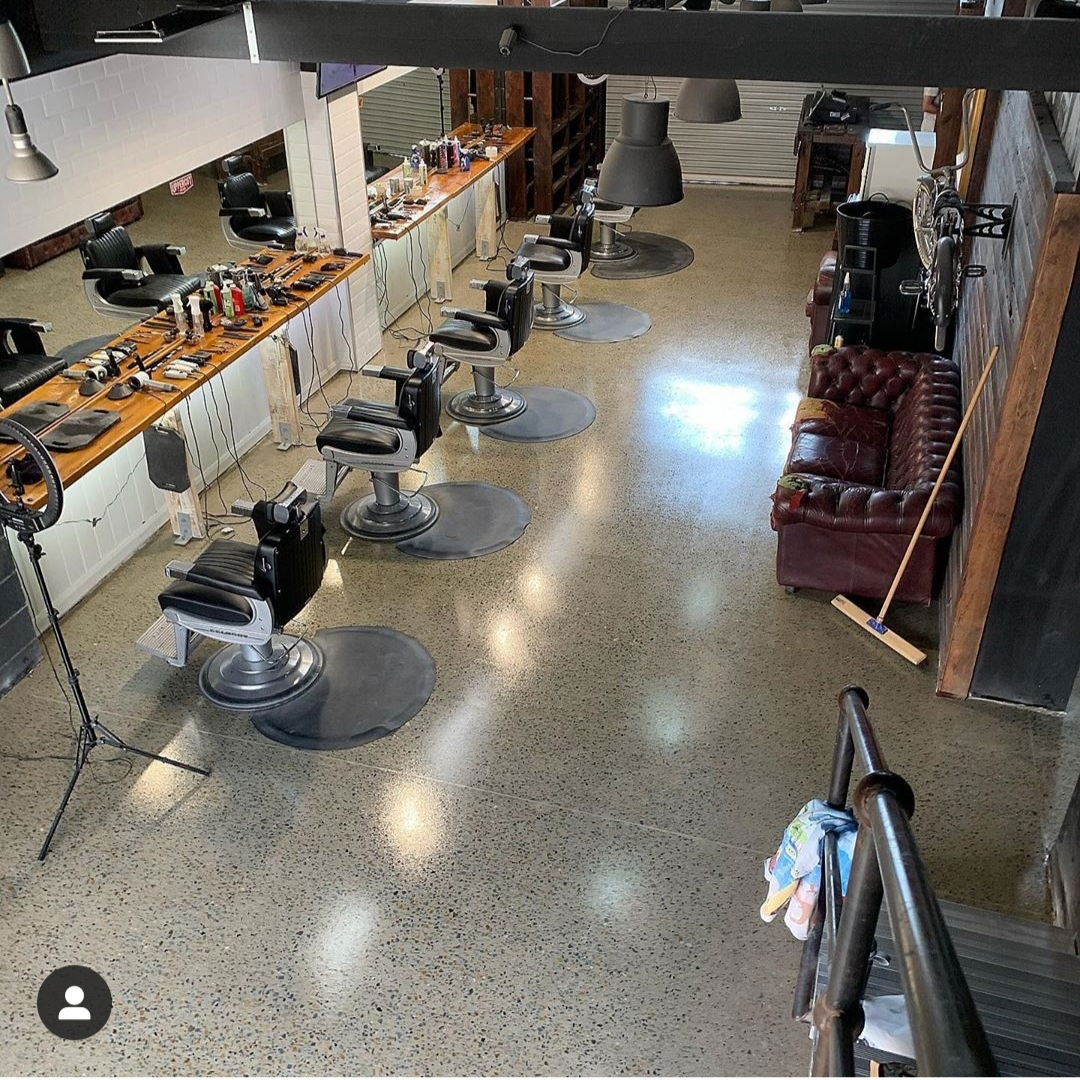
Polished concrete suits living areas and kitchens in new builds and renovations, garages and display homes, shops, salons, barbers, cafés, offices and showrooms, and features like BBQ bench tops.
It's best suited indoors. For pool surrounds, patios and paths we'd usually recommend a honed finish – see our Honed & Exposed Aggregate page.
Exposure and sheen options
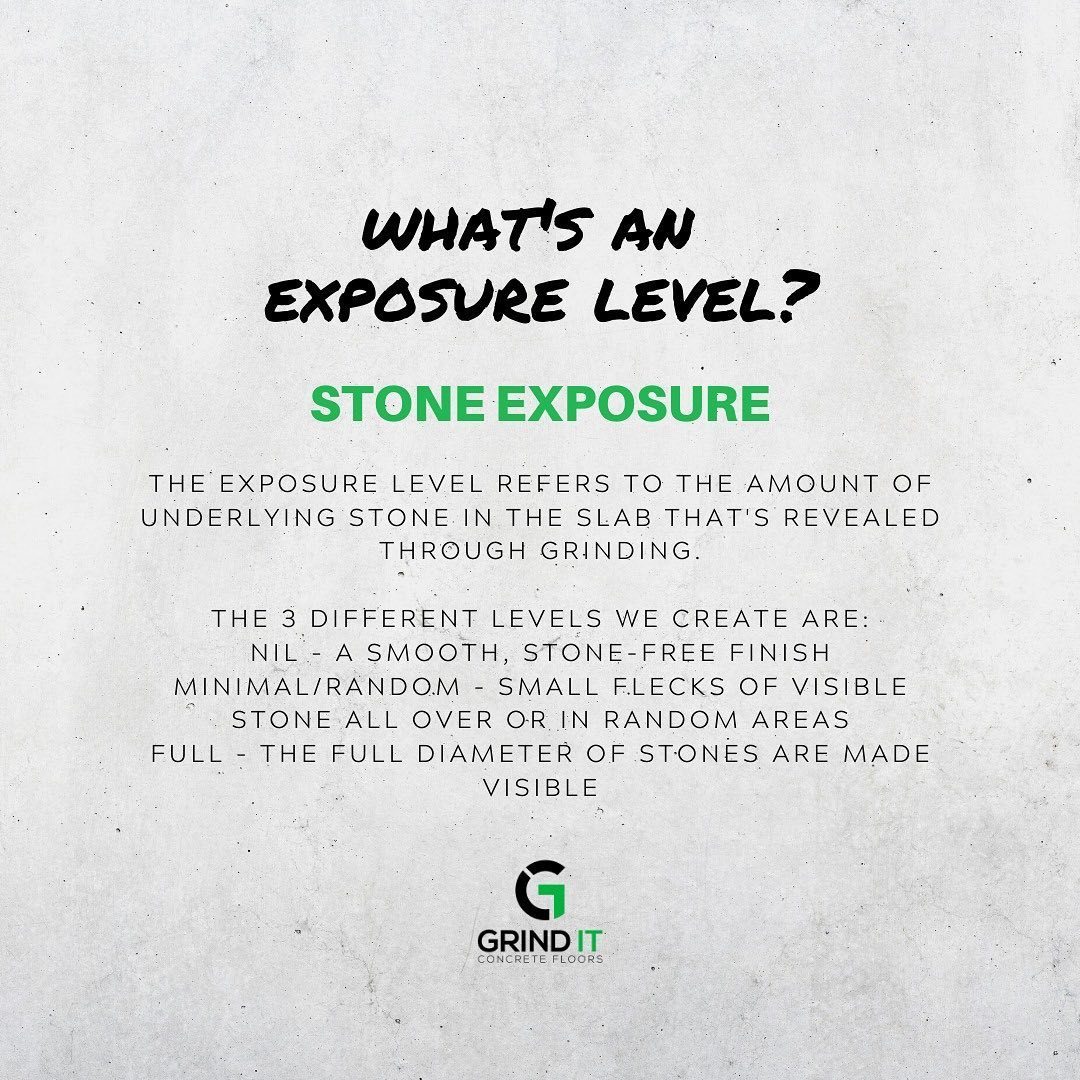
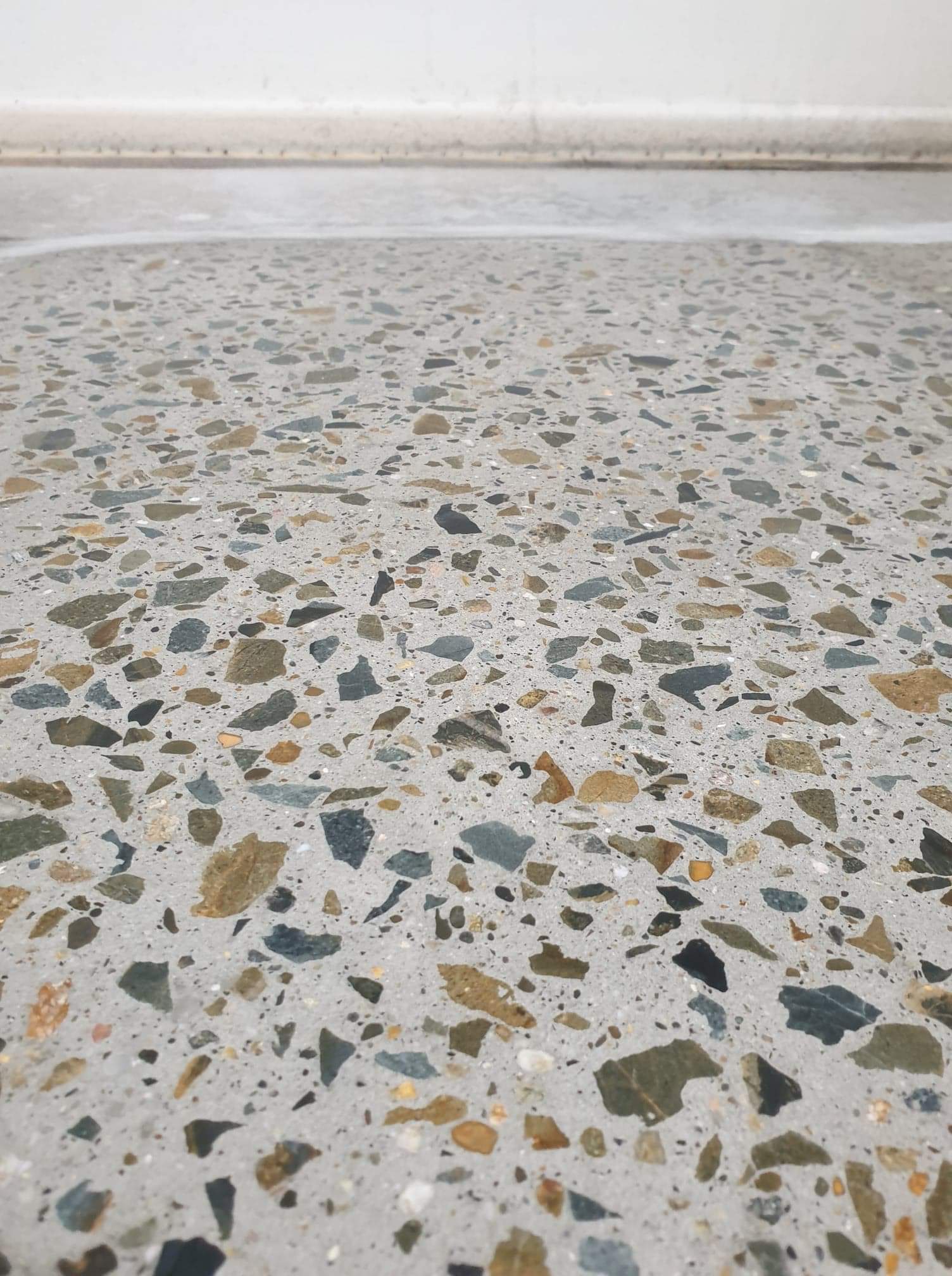
Exposure – how much stone you see:
No exposure – a clean, cement-look "industrial" finish.
Partial exposure – a light scattering of stone through the surface.
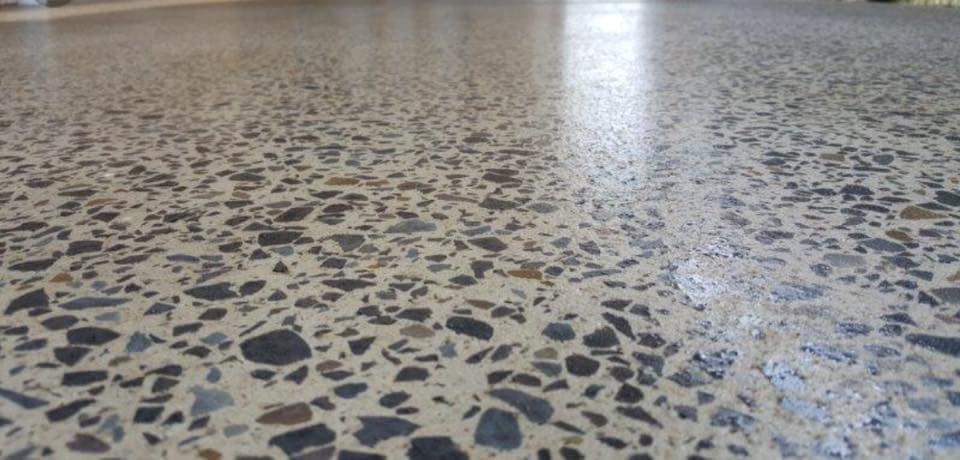
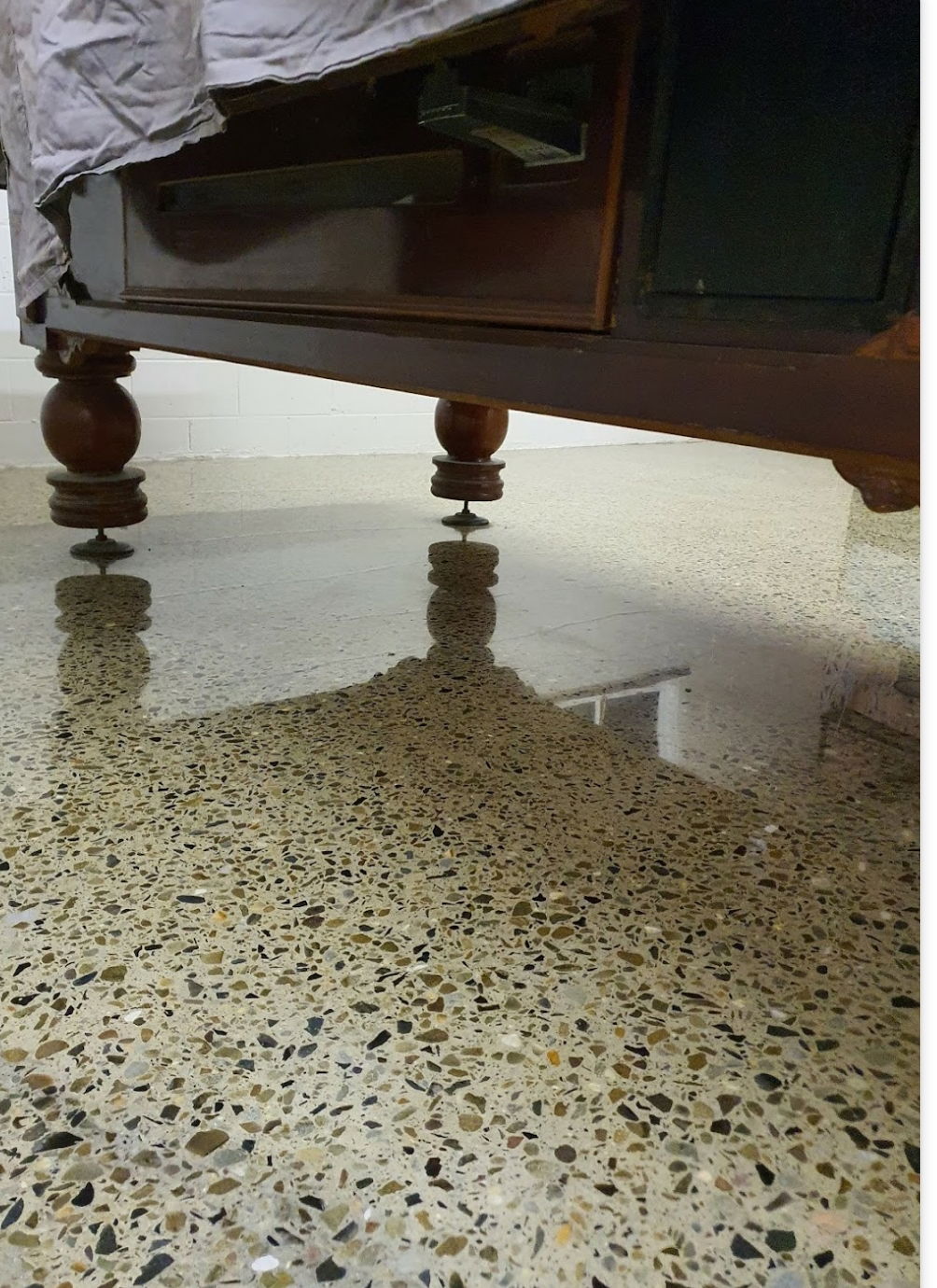
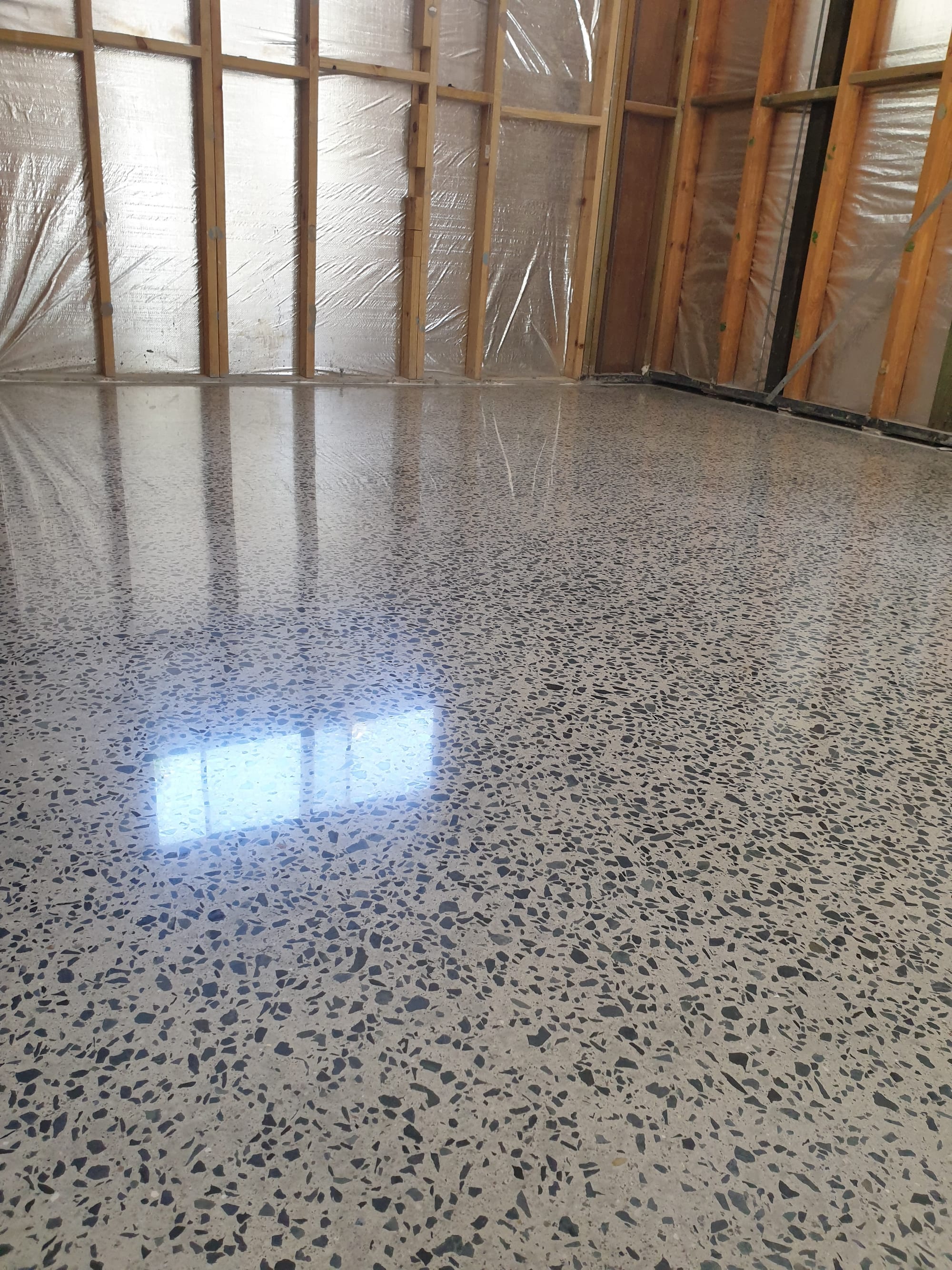
Full exposure – the aggregate fully revealed for that classic polished stone look.
Sheen – how shiny it gets:
Matt – low reflection, relaxed look.
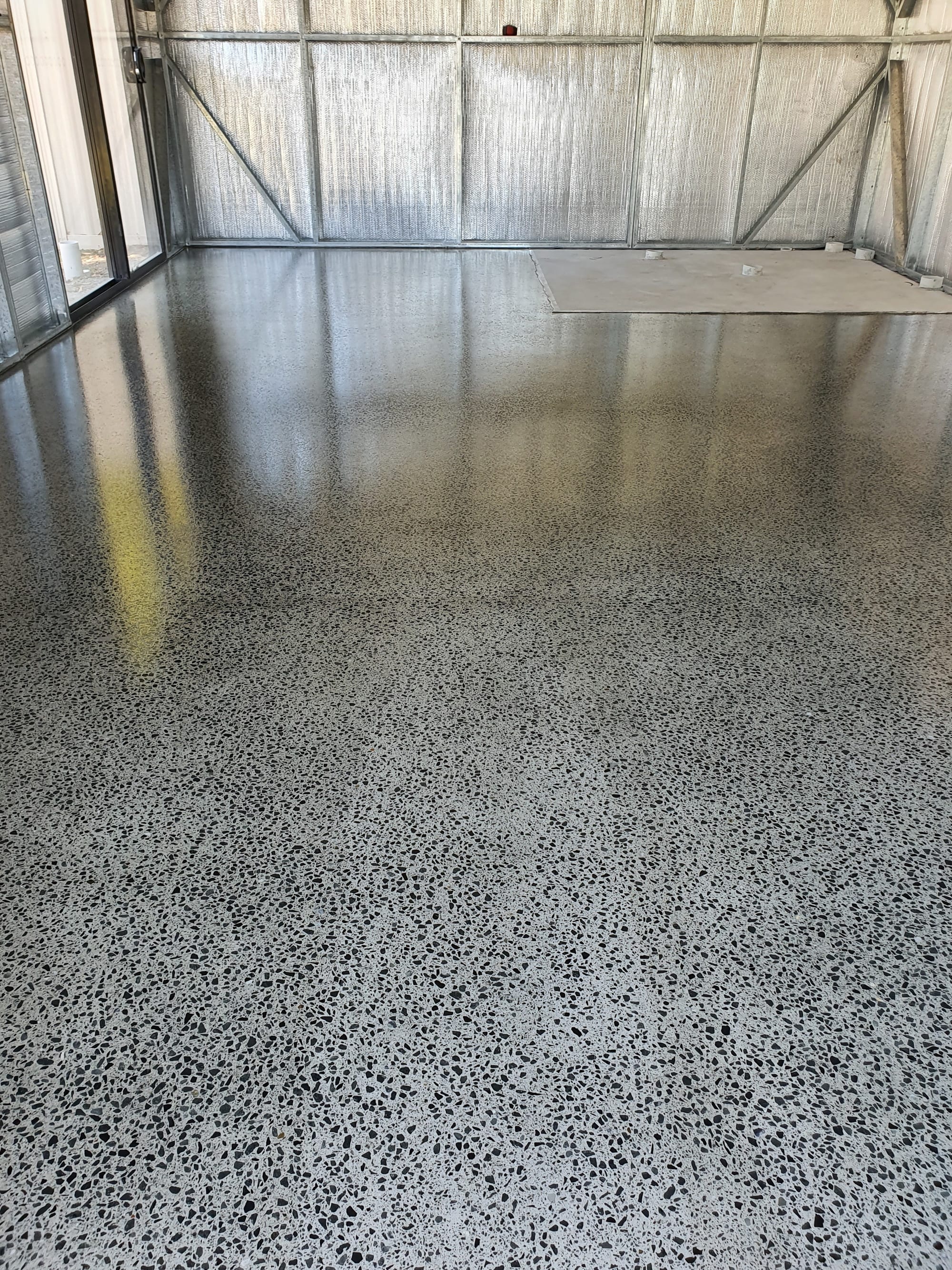
Satin / semi-gloss – for example, finished at 800 grit.
High gloss – for example, finished at 1500 grit.
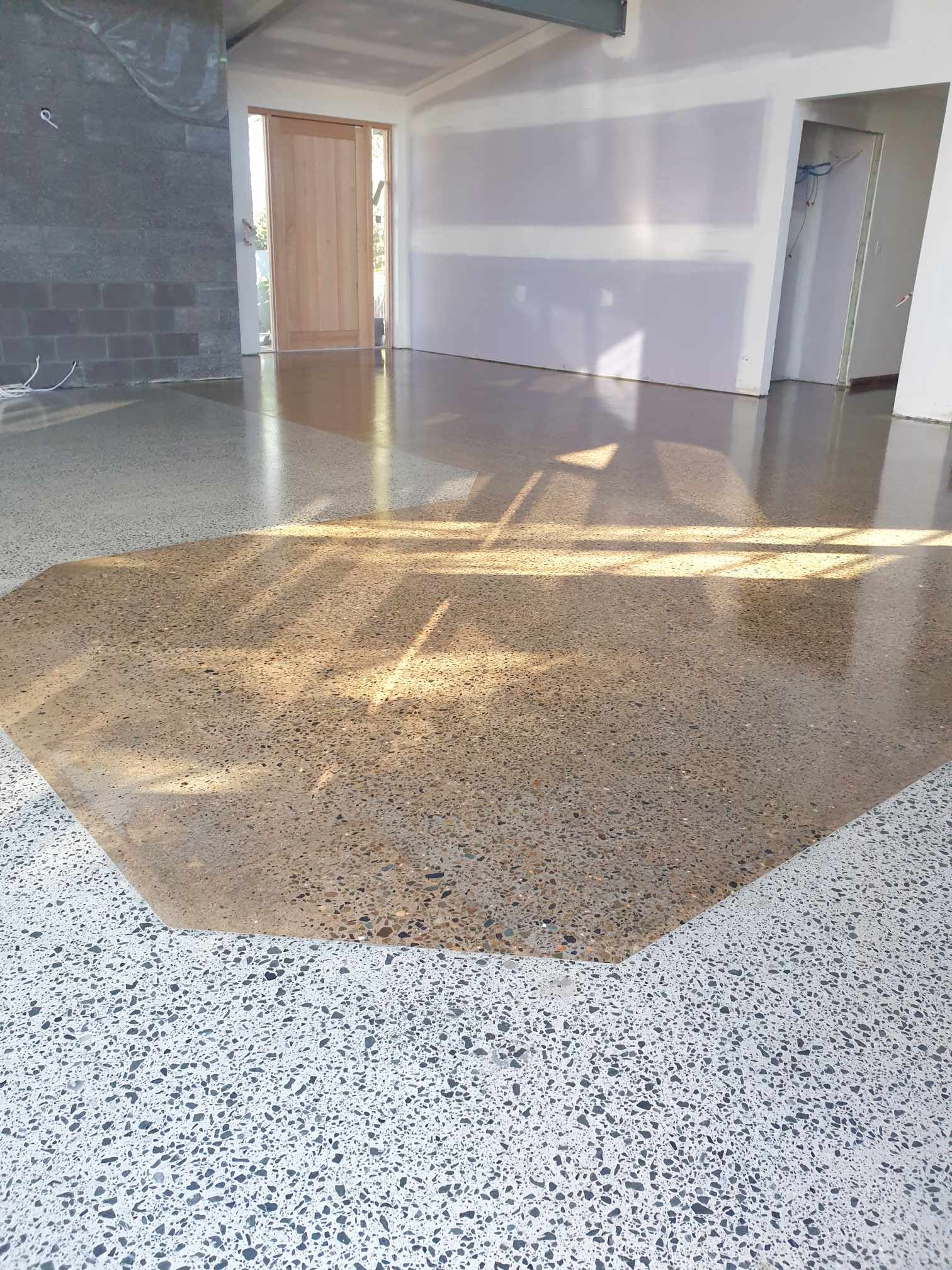
We can do a test patch so you can see the exposure before the whole job starts. Every slab is different, so the final look depends on your concrete.
Our process
- Site inspection and quote – we check the slab and talk through what's achievable.
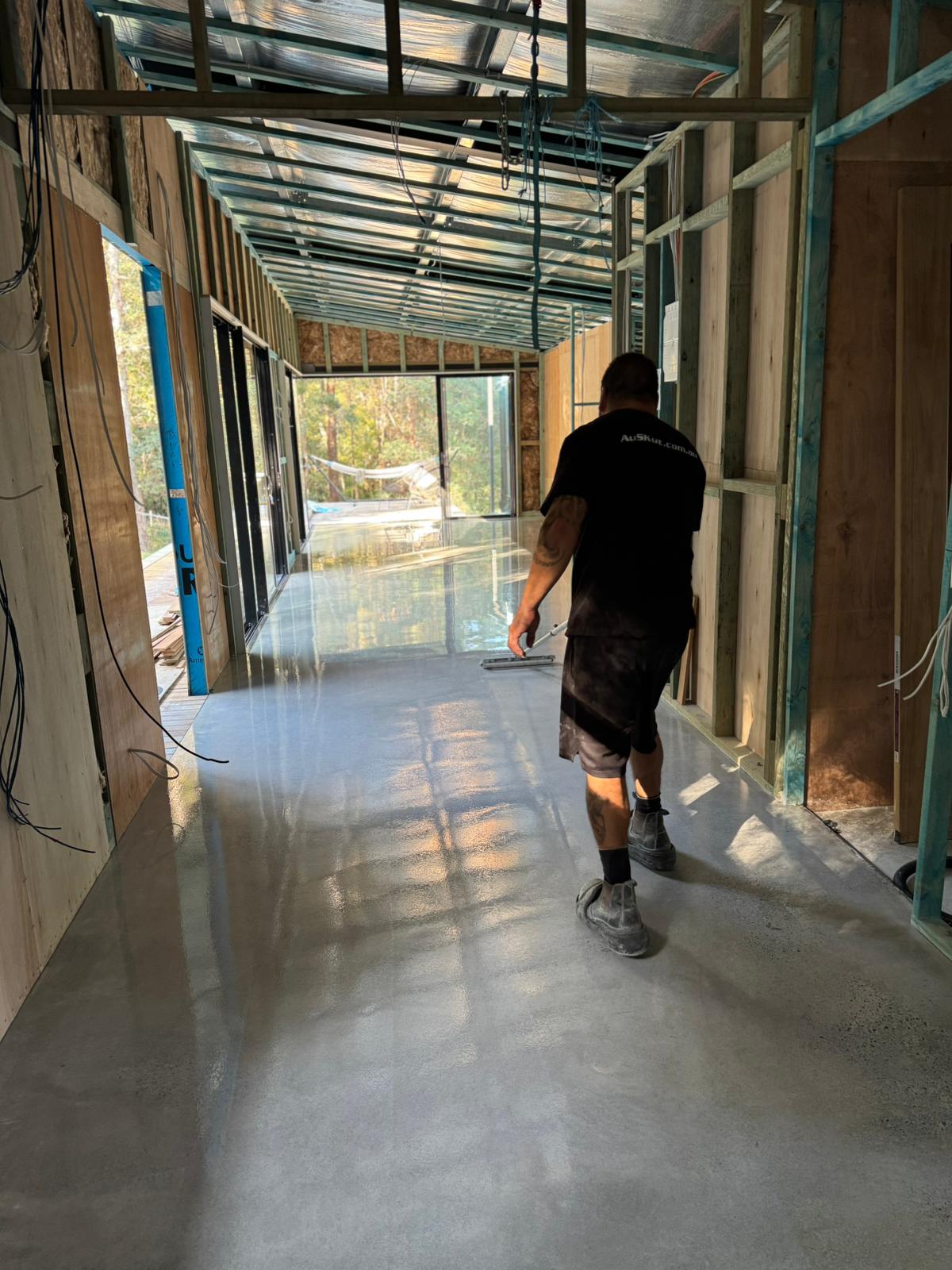
- Preparation – we remove old glue or coatings and repair cracks, holes and joints.
- Grinding – we cut back to your chosen exposure level.
- Grout and densify – we fill pinholes and harden the surface.
- Polishing – we work up through the grits to your chosen sheen.
- Optional stain guard and handover – including care tips for your new floor.
Every job is different, so we'll give you a timeframe with your free quote.
Caring for your polished floor
Dust mop regularly (microfibre is best) and put mats at doorways to catch grit. Damp mop weekly with a pH-neutral cleaner – no bleach, ammonia, vinegar or citrus cleaners. Wipe up spills quickly, especially wine, oil and acidic drinks. Depending on foot traffic, a professional re-polish every few years brings back the shine.
How much does polished concrete cost on the Gold Coast?
As a guide, mechanically polished concrete on the Gold Coast is $85 to $130 per square metre, depending on the finish. Grind and seal and hone and seal start from $70 per square metre. A typical double garage takes 2 to 3 days. Every slab is different, so the exact price comes from a free quote. Call Brendan on 0403 093 740 or book a quote online.
Mechanically polished concrete FAQs
Q: Is polished concrete slippery?
A: Like most smooth hard floors, it can be slippery when wet. A matt or satin finish offers more grip than high gloss, and we can talk through options for your space.
Q: Can you polish my existing slab?
A: Often, yes. Tiles, timber or carpet need to be lifted and the glue removed first. Old slabs can show patches and cracks – we'll tell you honestly what to expect.
Q: What's the difference between polished and grind and seal?
A: Polished gets its shine from the concrete itself. Grind and seal gets its shine from a sealer. Grind and seal is usually quicker and more budget-friendly; polished doesn't have a coating to wear through.
Q: How much does it cost?
A: As a guide, mechanically polished concrete starts from $85/m², up to around $130/m² depending on the finish you choose. The final price depends on the condition and size of your slab – your free quote will give you the exact price.
Book a quote
Thinking about a polished concrete floor? Book a free quote online or call Brendan on 0403 093 740 – we're always happy to chat.
Highest Quality Workmanship On The Gold Coast
Call Today For All Inquiries 0403 093 740
About Grind It
Transforming Concrete. Raising Standards.
With years of hands-on experience and a reputation for problem-solving, Grind It turns plain concrete into timeless finishes. Whether it’s polished concrete, epoxy flake, or honed surfaces — we deliver high-end results that last.
Got a small job no one wants to quote? We’ll get it done — fast and professionally.
We pride ourselves on attention to detail and customer-first service. Every project is treated like it’s our own, ensuring a durable, clean finish you’ll be proud of.
Based on the Northern Gold Coast, we service Gold Coast, Brisbane, and everywhere in between.
💬 Have a question? Call us direct on 0403093740 — we’re always happy to chat.
📸 Check out our work in the gallery below.
With years of hands-on experience and a reputation for problem-solving, Grind It turns plain concrete into timeless finishes. Whether it’s polished concrete, epoxy flake, or honed surfaces — we deliver high-end results that last.
Got a small job no one wants to quote? We’ll get it done — fast and professionally.
We pride ourselves on attention to detail and customer-first service. Every project is treated like it’s our own, ensuring a durable, clean finish you’ll be proud of.
Based on the Northern Gold Coast, we service Gold Coast, Brisbane, and everywhere in between.
💬 Have a question? Call us direct on 0403093740 — we’re always happy to chat.
📸 Check out our work in the gallery below.
Testimonials
Blog
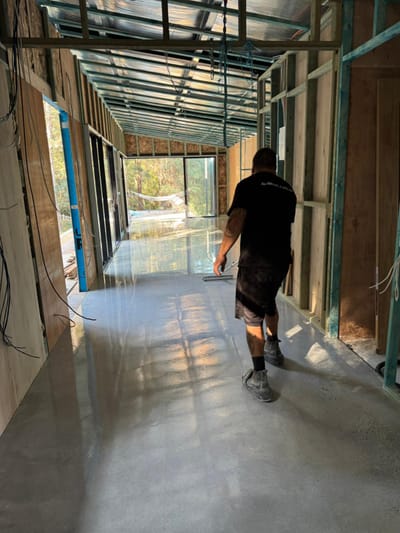

Questions and Answers
Read More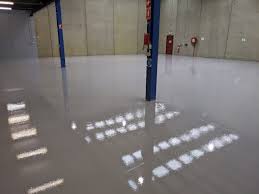

7 advantages in installing polished concrete flooring
Read More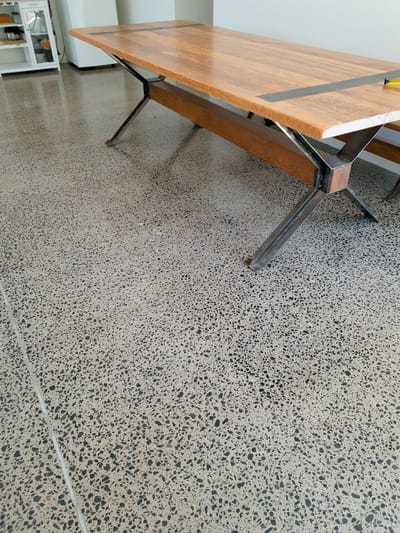
3 reasons concrete is polishing up well along side traditional flooring
Read More
Weighing up your options.
Read More
A few of our favourite current #flooringinspiration shots
Read More
How to clean & look after your polished concrete floor
Read More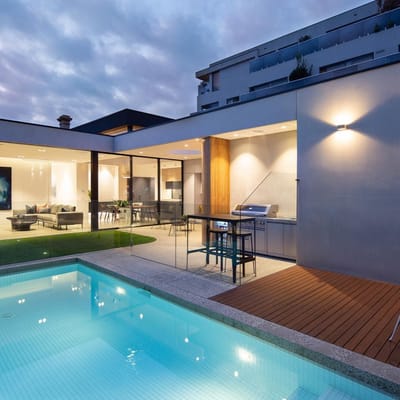
The visual & practicality differences between the two finishes, explained
Read More
Polished concrete floors are the environmentally friendly flooring option
Read More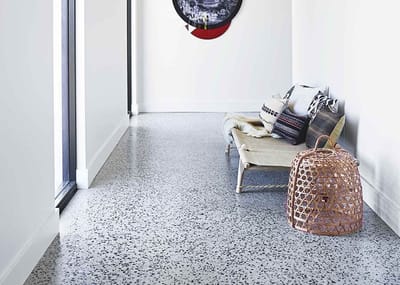

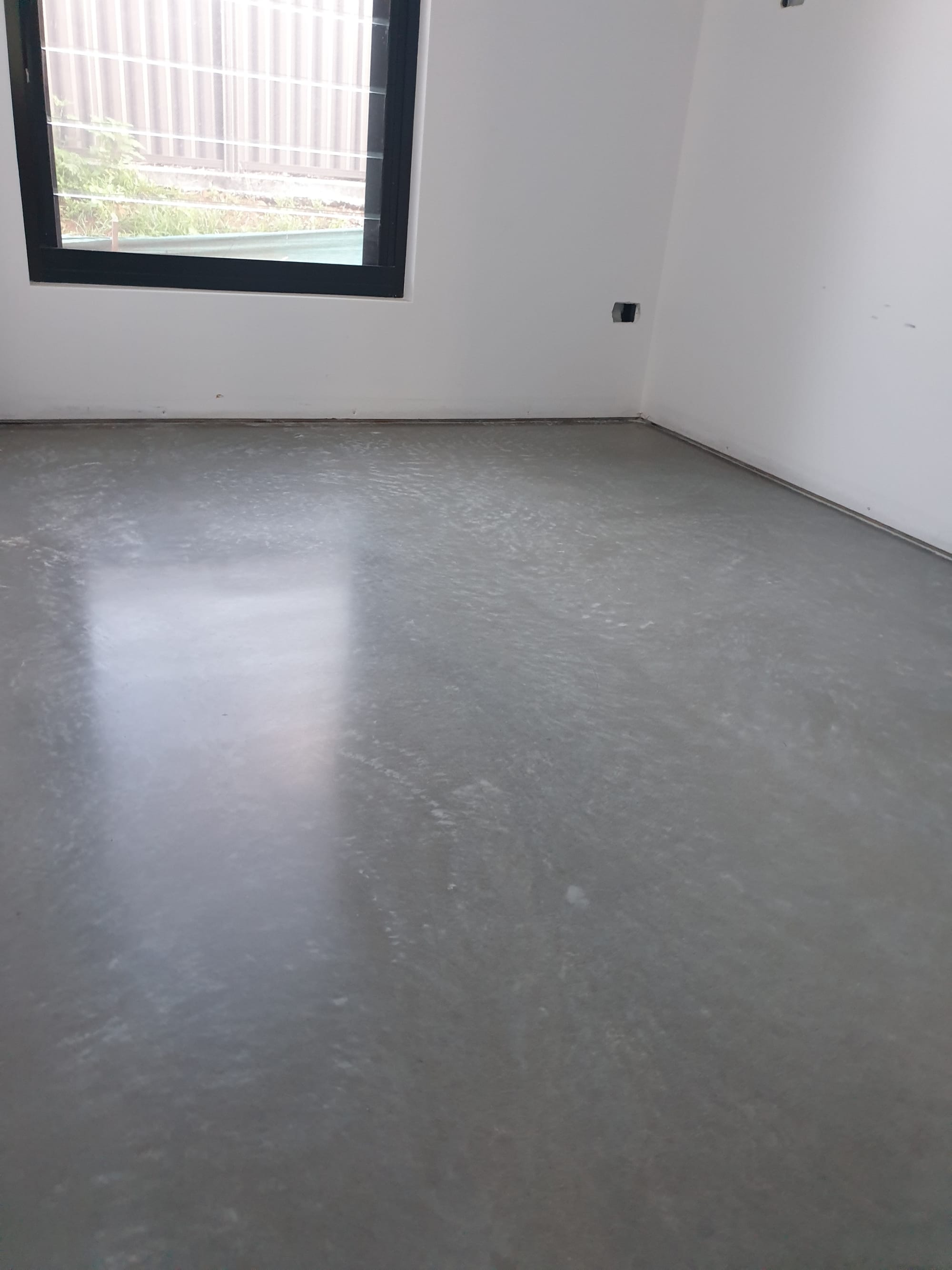
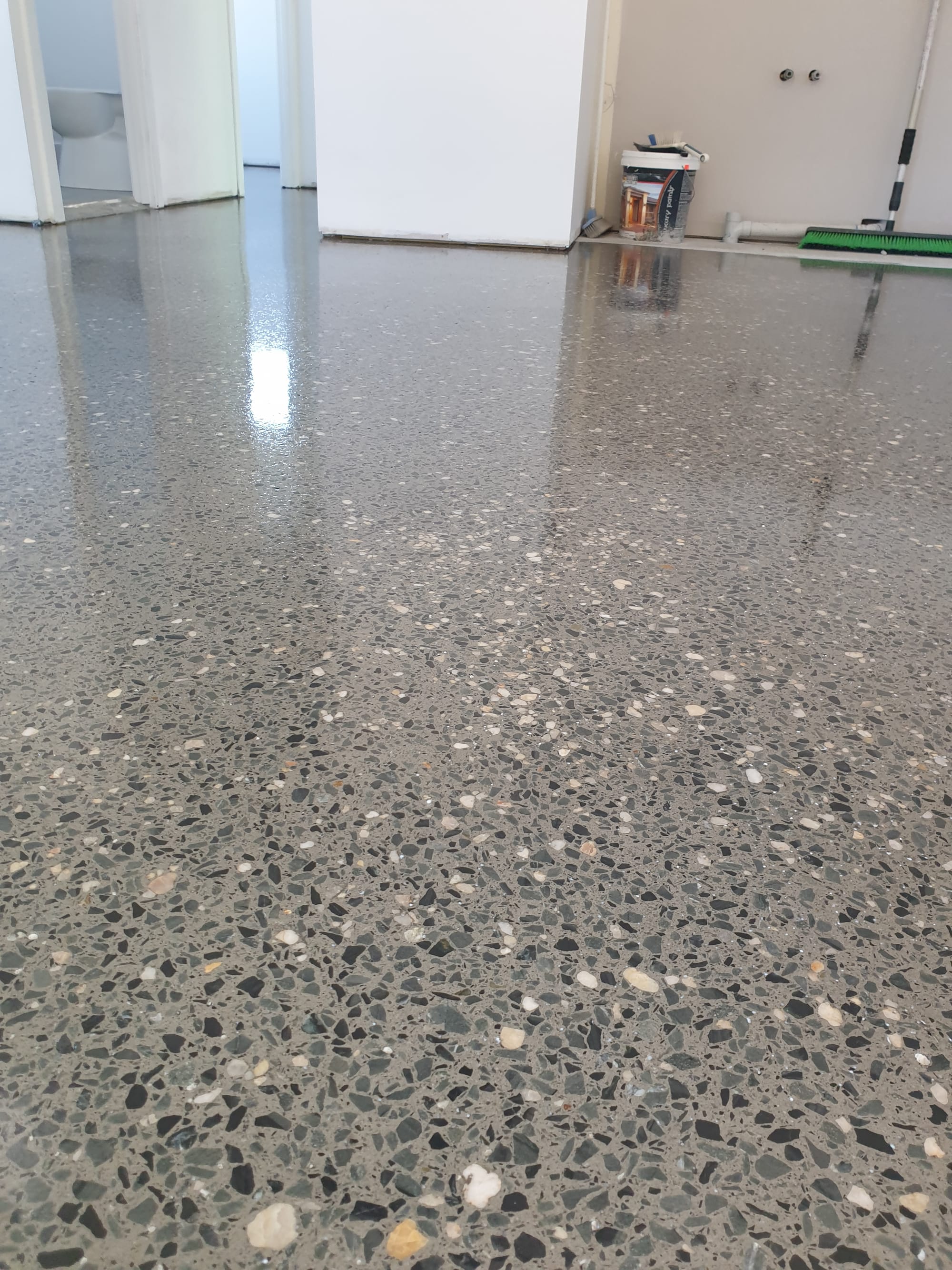
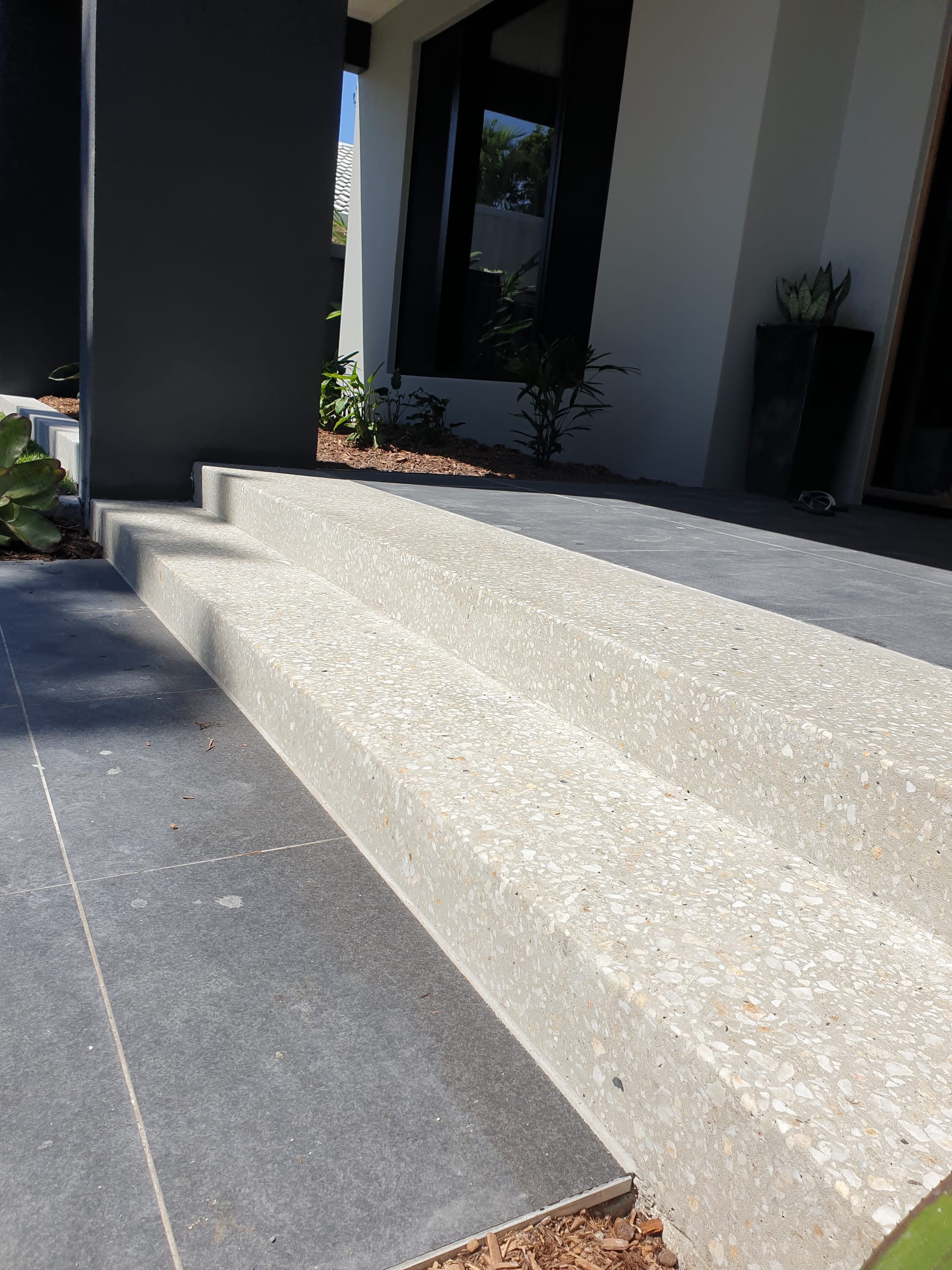
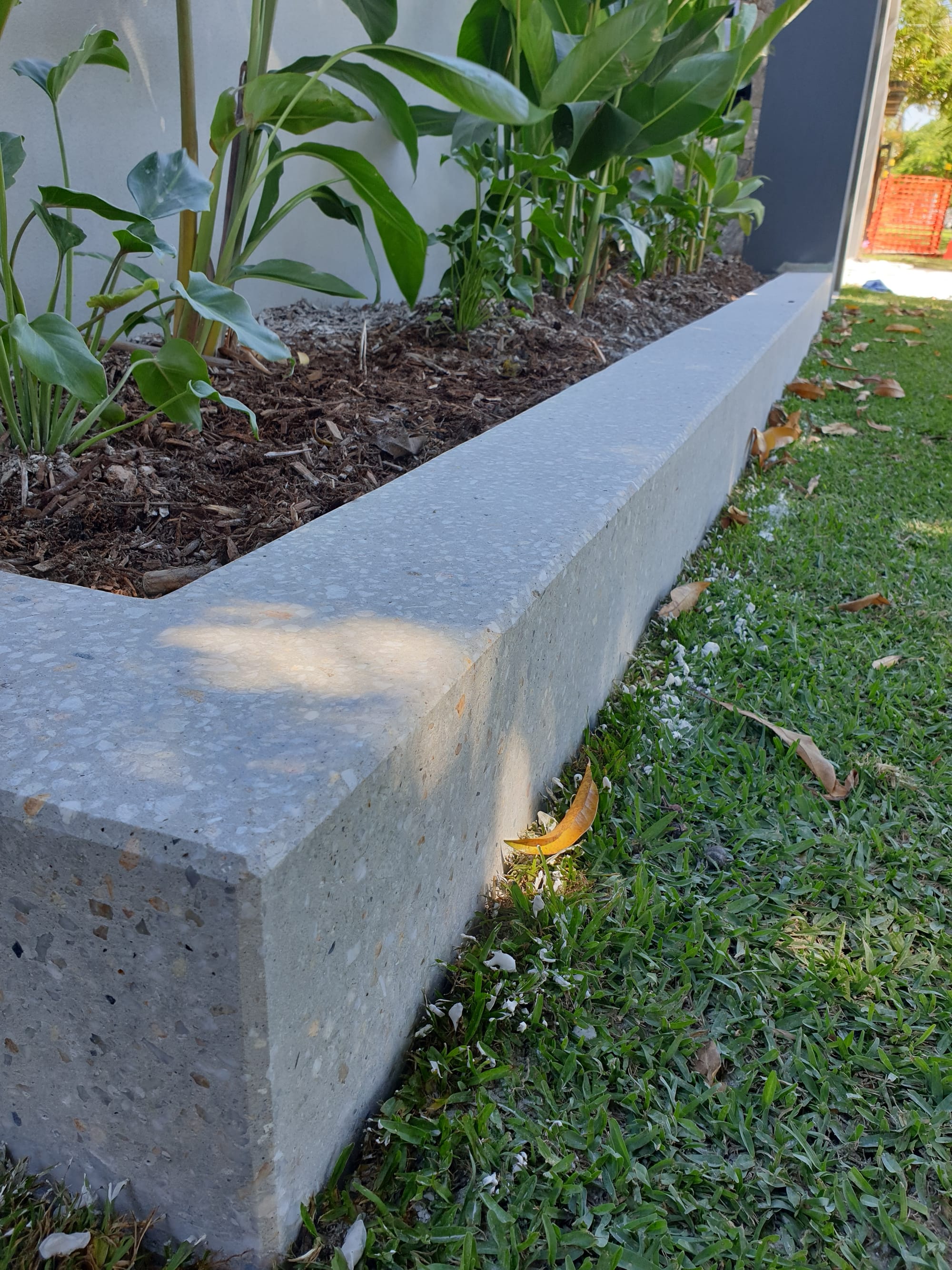
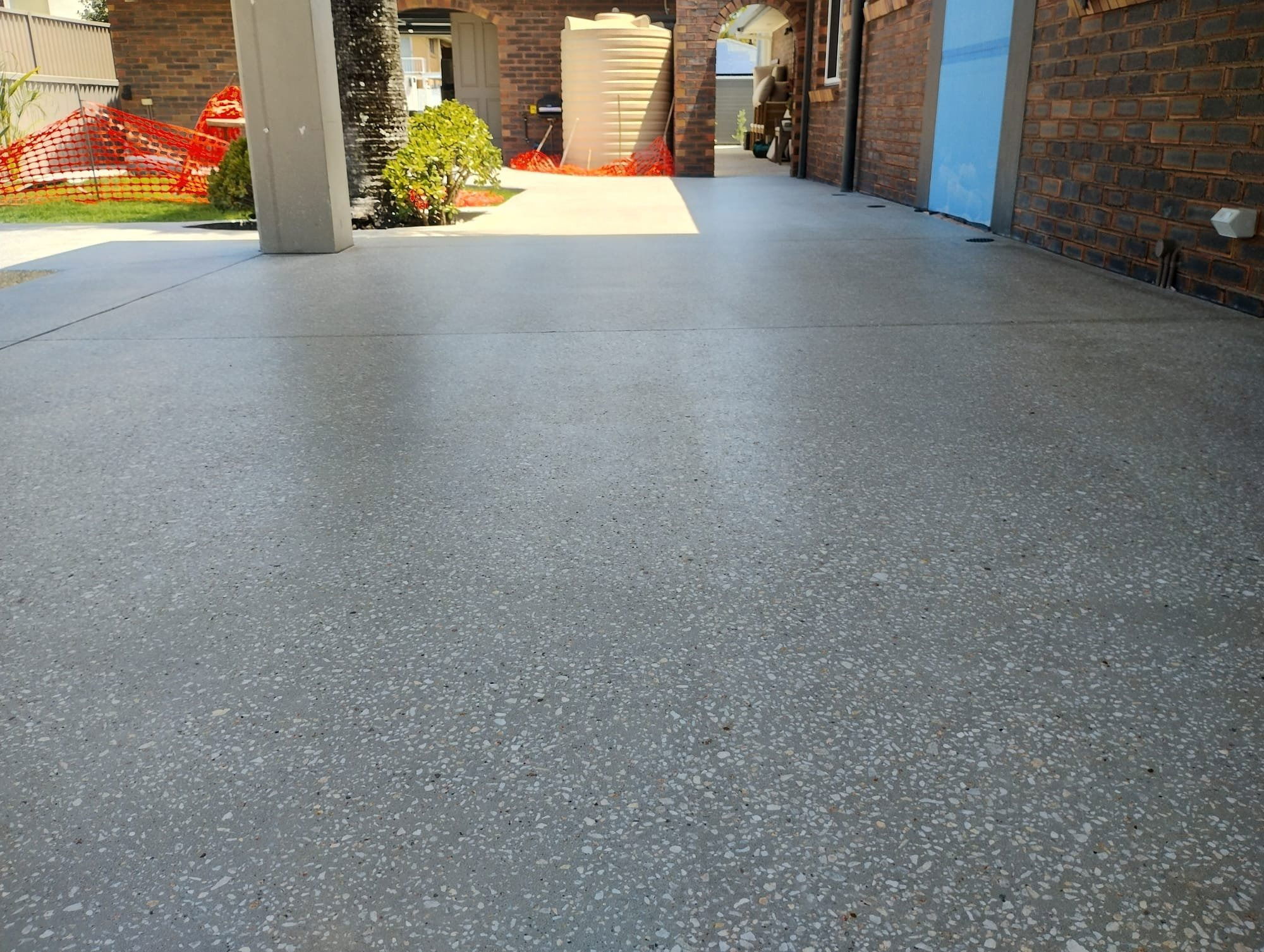
Grind and Seal
Concrete grinding Gold Coast
Grind and Seal Concrete Floors
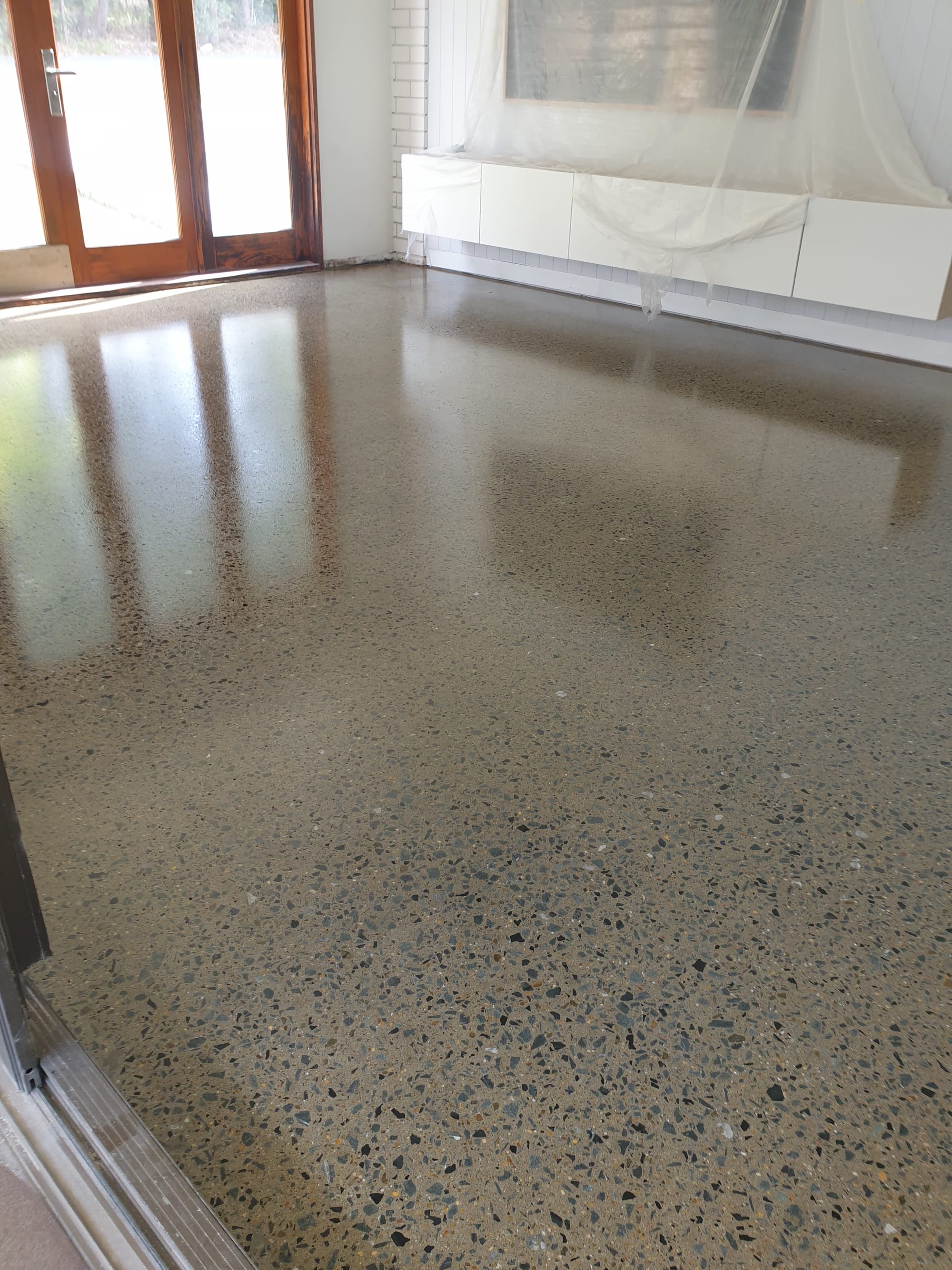
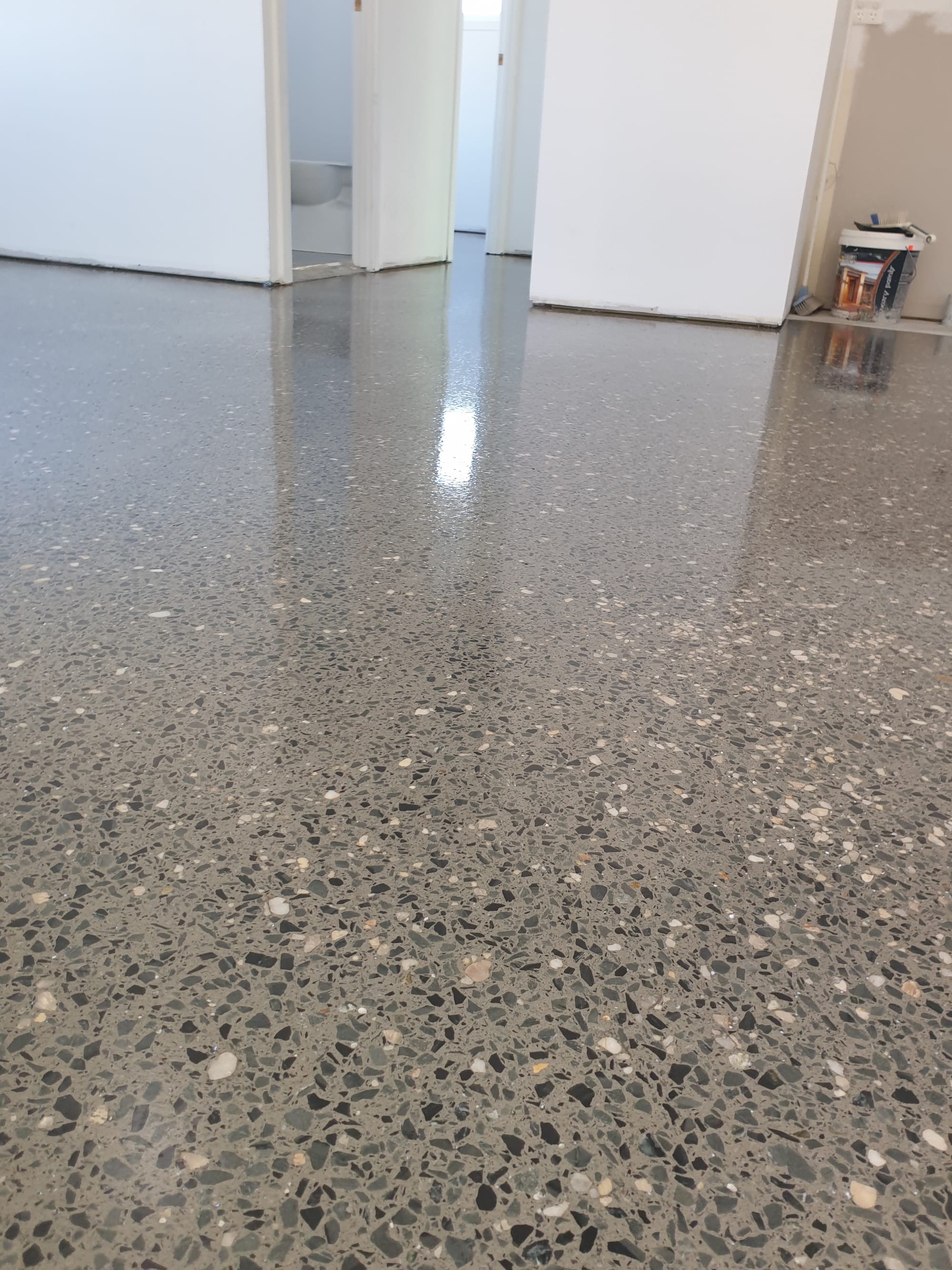
Concrete grinding on the Gold Coast is how a grind and seal floor starts. It gives you the polished concrete look without the full mechanical polishing process. We grind the slab to show as much stone as you like, fill the pinholes, then apply a quality sealer in the sheen you choose. It's a popular, cost-effective option for homes, garages and commercial fit-outs, and it can often be finished in just a few days.
What is grind and seal?
Grind and seal is a two-part process. First, we grind the concrete with diamond tooling to open up the surface and expose the aggregate to your chosen level. Then we seal it. Mechanical polishing gets its shine from grinding and polishing through many grits; grind and seal gets its shine from the sealer. With fewer grinding stages, it takes less time and usually costs less.
Where does it suit?
Grind and seal is a great fit for living areas and renovations where you want the polished concrete look on a tighter budget, garages (including display home garages), and shops, barbers, salons and cafés. With the right UV-stable sealer and a non-slip additive, it also works in alfresco and outdoor areas. It's a good way to bring an old slab and a new extension together into one floor, too.
Exposure, sealer and sheen options
Exposure: no exposure (cement look), partial exposure ("salt and pepper") or full stone exposure.
Sealer: we commonly use a water-based polyurethane. Solvent-based sealers are also an option, depending on the job.
Sheen: gloss, satin or matt. For wet areas, outdoor areas or high traffic, a non-slip additive can be mixed into the sealer.
Our process
- Quote and site check – we look at the slab and talk about exposure, sheen and how the space will be used.
- Prep and repairs – we remove old coatings and glue, and patch cracks and holes.
- Grind – we cut back to your chosen exposure level.
- Grout – a grout coat fills pinholes and evens out the surface for a cleaner finish.
- Seal – we apply coats of sealer, for example two coats of gloss polyurethane on a full stone exposure floor.
- Cure and handover – we'll let you know when the floor is ready for foot traffic, furniture and vehicles.
Caring for a grind and seal floor
Sweep or dust mop regularly so grit doesn't scratch the sealer, and mop with a pH-neutral cleaner – no harsh chemicals. Use felt pads under furniture and mats at entries. Over time, high-traffic areas may need a fresh topcoat. That's one of the advantages – the floor can be recoated without starting again.
Grind and seal FAQs
Q: Is grind and seal the same as polished concrete?
A: It looks similar, but the shine comes from a sealer rather than from polishing the concrete itself. See our Mechanically Polished Concrete page for a comparison.
Q: Can grind and seal go outside?
A: Yes, with the right sealer. UV-stable sealers and non-slip additives make it suitable for many outdoor areas. For pool surrounds, we'll often suggest a honed finish instead.
Q: Will the old and new concrete match?
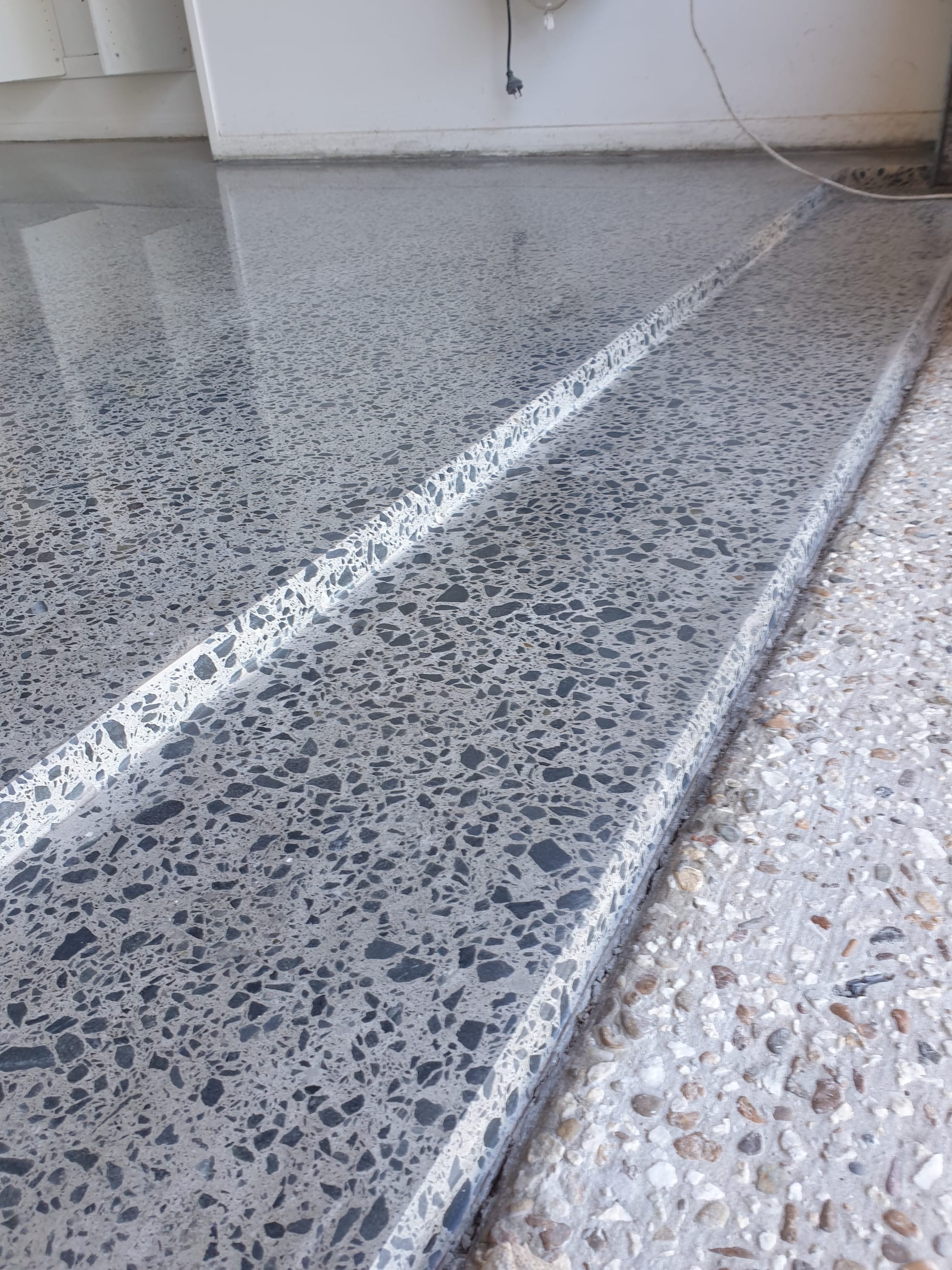
A: Every slab is different, and new and old concrete can look different. A grind and seal can bring them together, but some colour difference is normal. We'll talk it through before we start.
Q: How long does it take?
A: A standard double garage typically takes 2–3 days. For larger areas, we'll give you a timeframe with your free quote.
Q: How much does grind and seal cost?
A: As a guide, grind and seal starts from $70/m². The final price depends on the condition and size of your slab and the finish you choose – your free quote will give you the exact price.
Book a quote
Want the polished look for less? Book a free quote for a grind and seal floor, or call Brendan on 0403 093 740.
Honed & Exposed Aggregate
Honed concrete Gold Coast
Honed Concrete & Exposed Aggregate – Pool Surrounds, Patios, Paths & Stairs
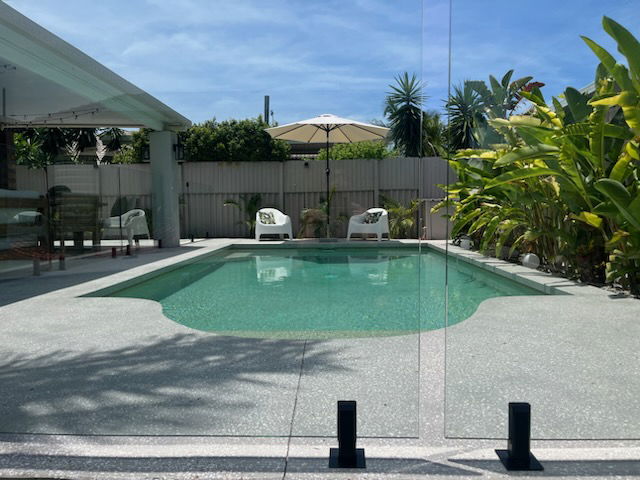
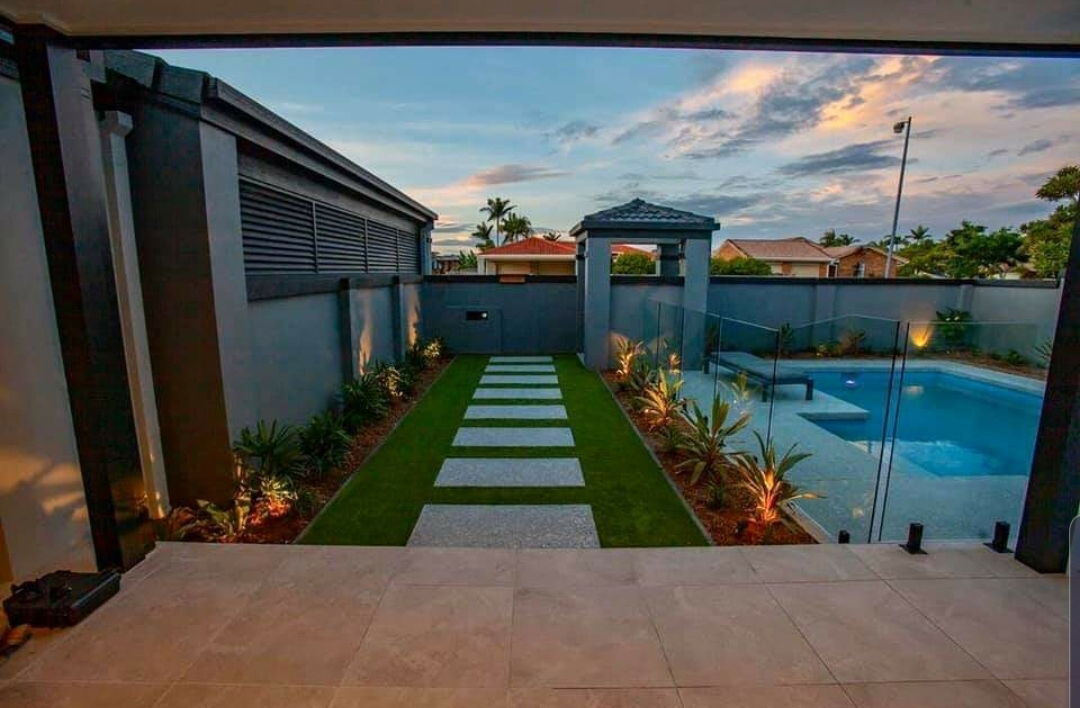
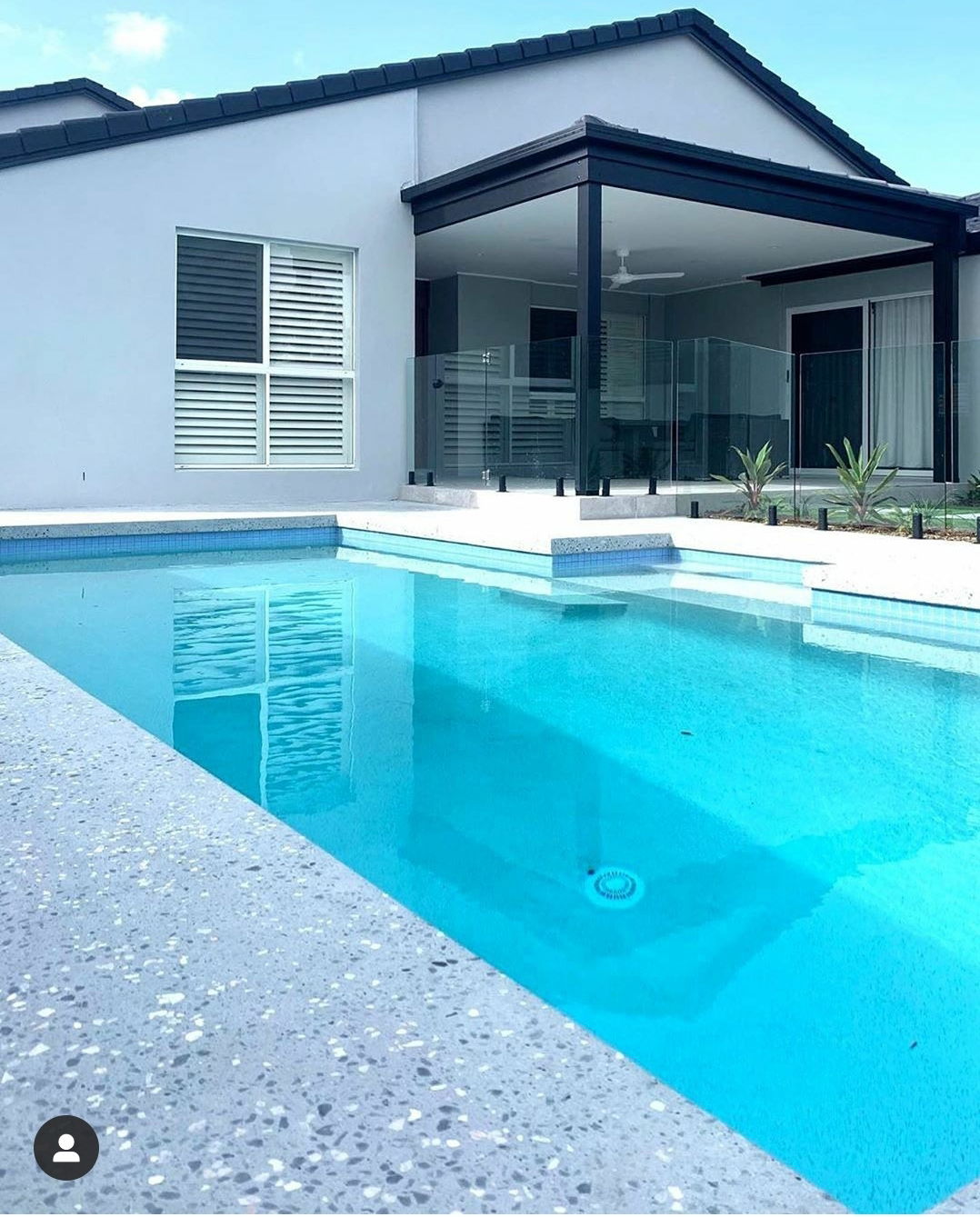
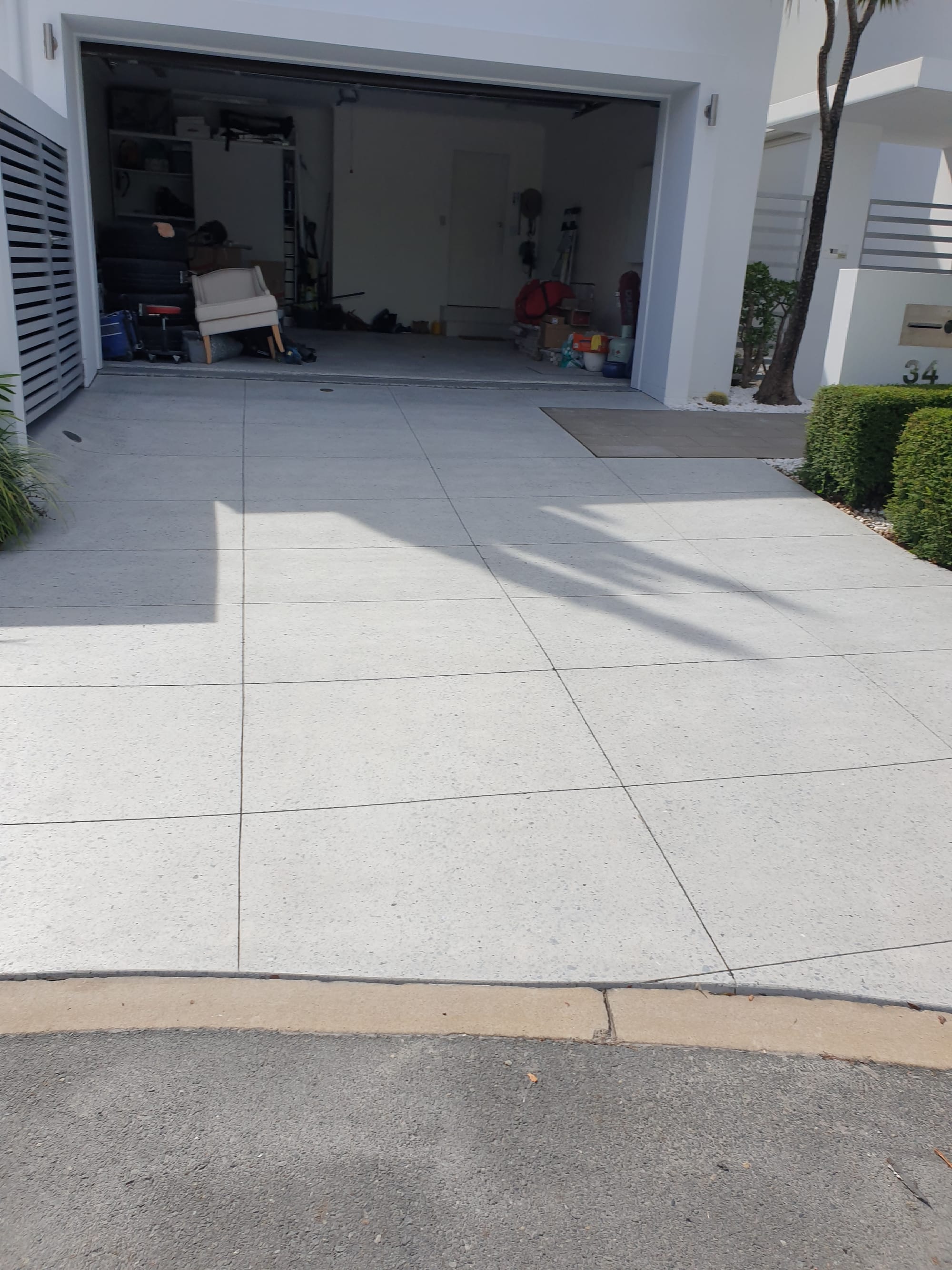
Honed concrete on the Gold Coast is a smooth matt finish for pool surrounds, patios, paths and stairs. We grind the concrete back to reveal the stone, stop at a smooth matt finish and seal it. It's ideal for outdoor living across the Gold Coast, Brisbane and Northern NSW – around the pool, on the patio, down the path and up the stairs.
What is honed concrete?
Honed concrete is ground and smoothed, but not polished to a gloss. It has a satin to matt look and reflects much less light than polished concrete. It also tends to look a little lighter in colour. Because the surface isn't glassy, it's a better choice for outdoor and wet areas.
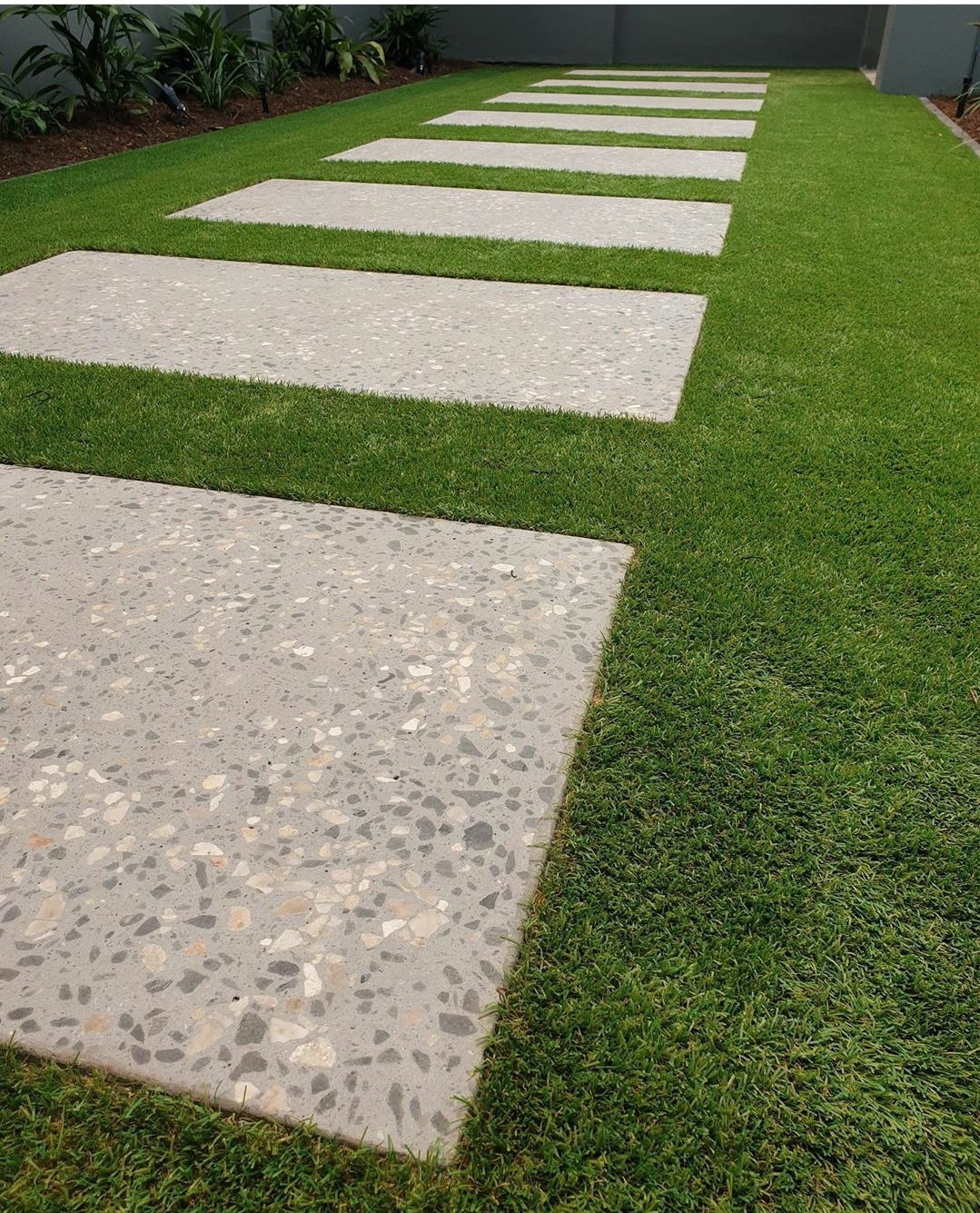
Exposed aggregate, the way we do it, means grinding the top of the slab off to show the stones inside the concrete. You can choose a light exposure or go all the way to full stone exposure.
Where does it suit?
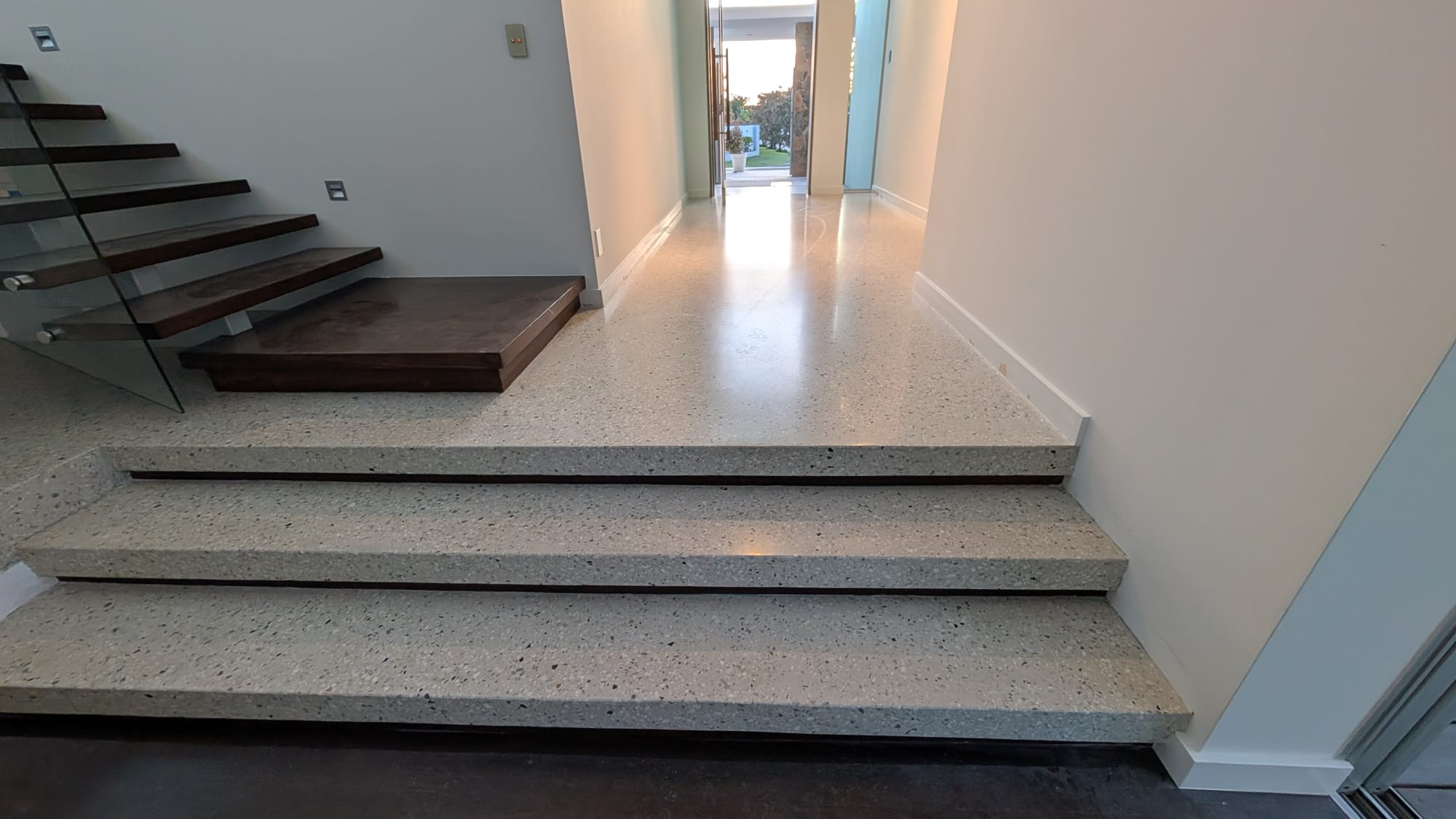
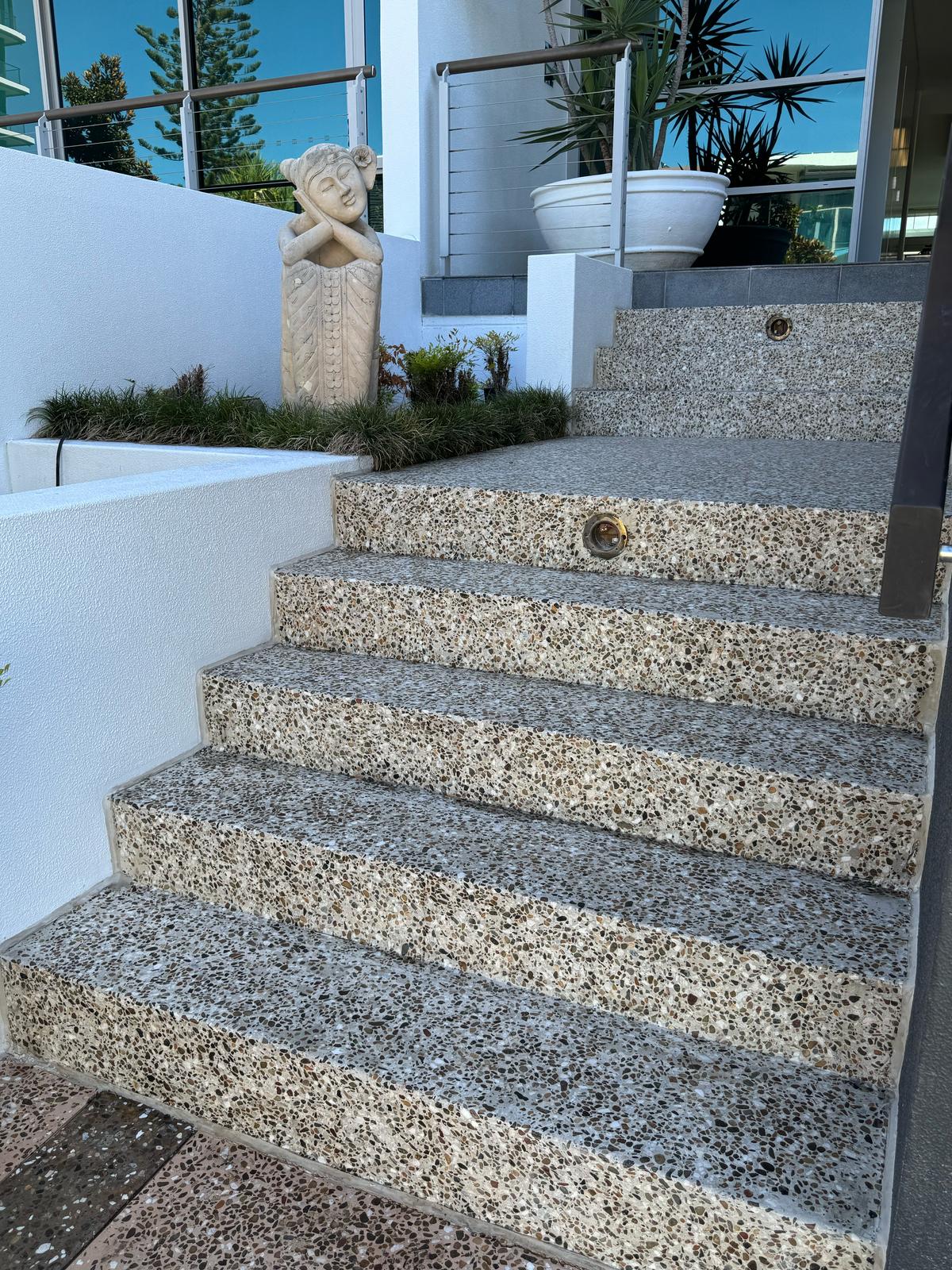
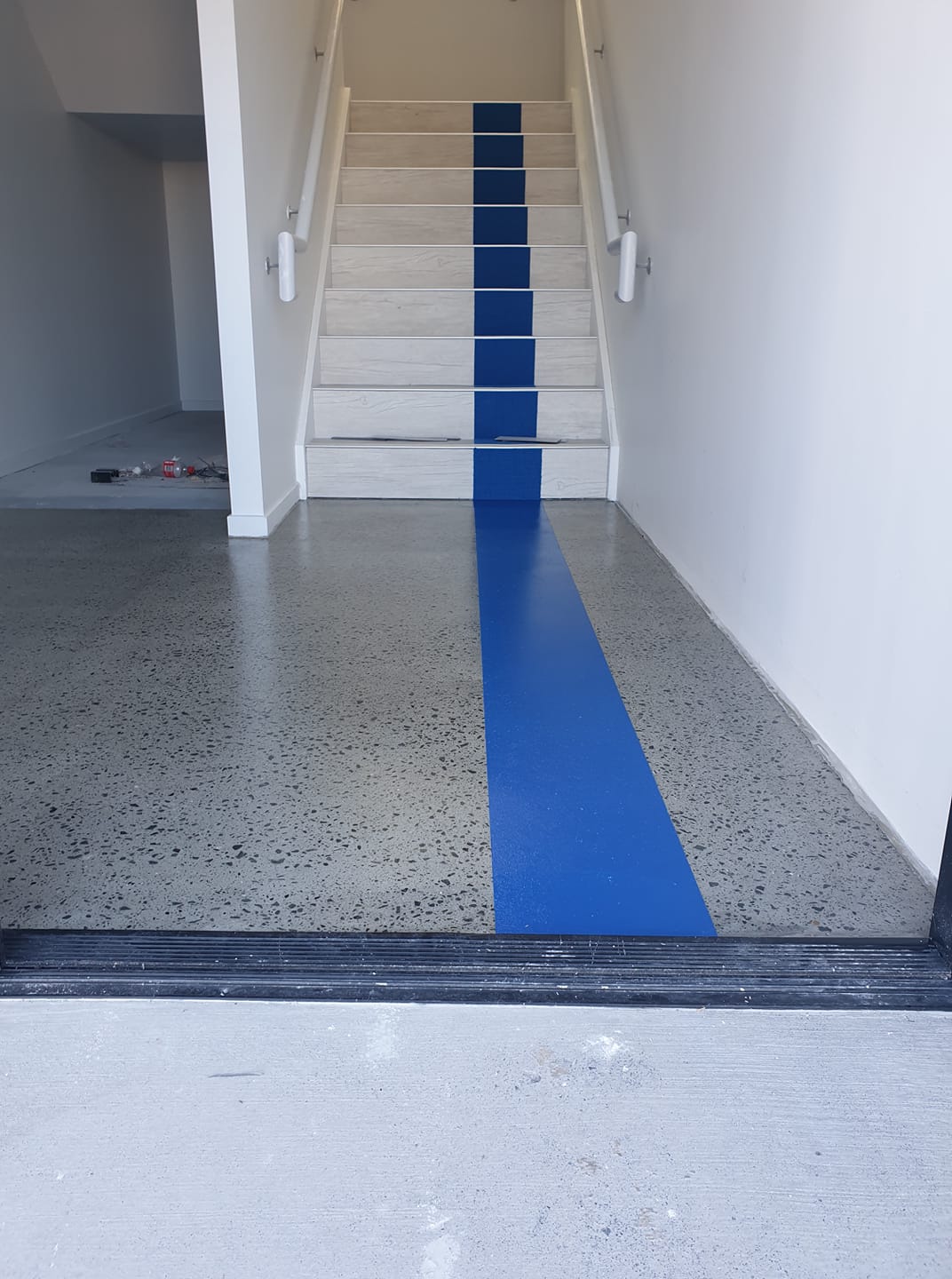
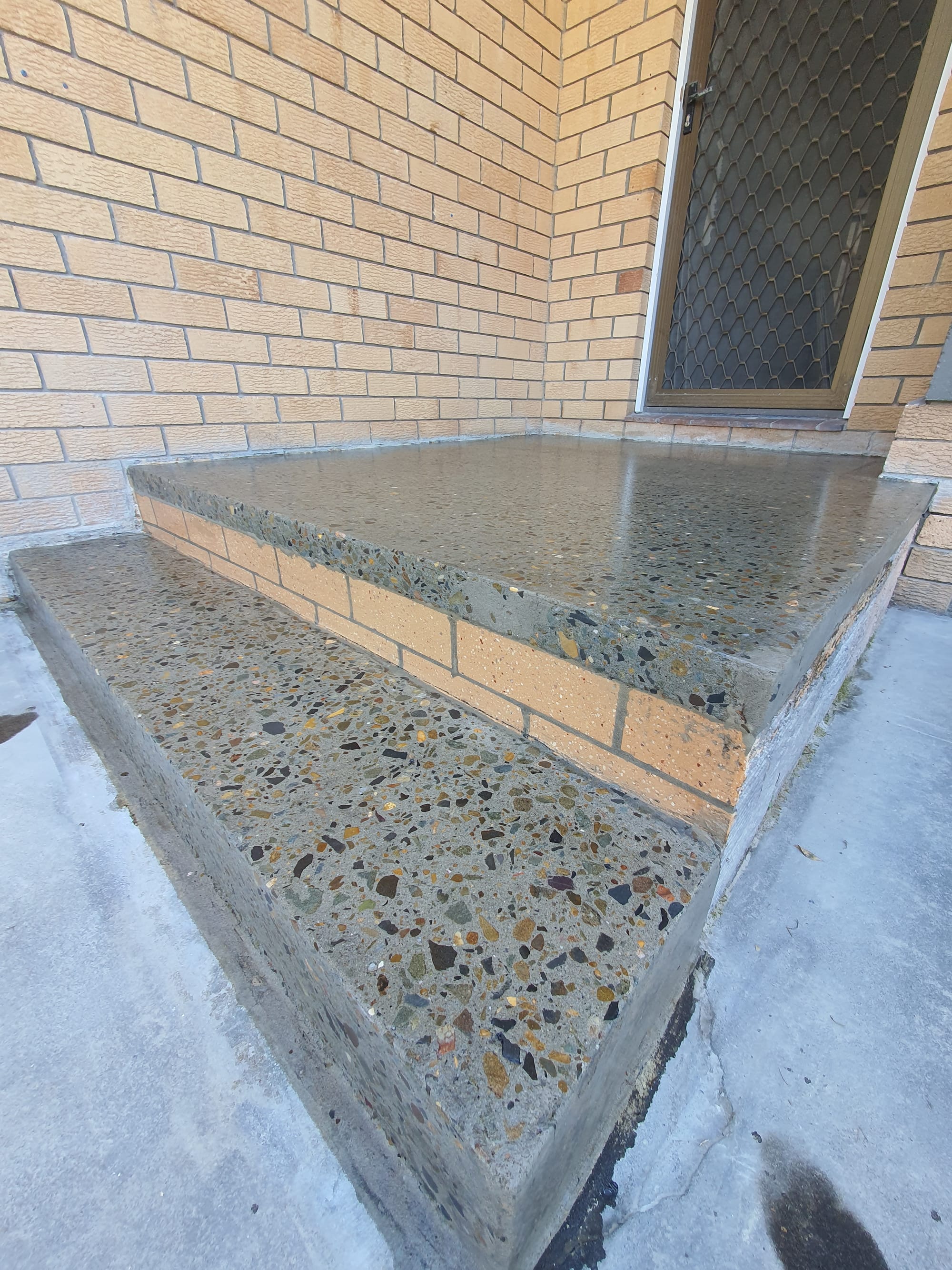
Honing works well on pool surrounds, patios, alfresco areas and courtyards, paths and steppers, and stairs and steps. We also hone hob walls, block walls, brick walls and BBQ benches. It's a great way to refresh an old patio – grinding can bring tired concrete back to life.
"Brenden did a brilliant job of exposing our old concrete patio floor. He was excellent at communication and worked very hard to get the job done in a very short time span. We are really pleased with the how well the floor came up..." – Anna Bolton
Finish and sealer options
Exposure: light, partial or full stone exposure.
Honing level: we stop at a coarser grit for a natural finish with more grip than a gloss.
Sealer: a natural-look penetrating sealer that soaks in and keeps the raw look, or a topical sealer (such as water-based polyurethane) with a satin or matt finish.
Non-slip: a non-slip additive can be added to topical sealers for pool areas and steps.
Slip resistance matters around pools and stairs, so we'll recommend a finish that suits the area.
Our process
- Site visit – we check the concrete and agree on exposure and finish.
- Repairs – we patch holes and cracks.
- Grind and hone – we expose the stone and smooth it to your chosen finish, including edges, steps and nosings.
- Clean – we remove slurry and dust from the site.
- Seal – we apply a penetrating or topical sealer, with non-slip where needed.
Outdoor work depends on the weather – we'll plan around rain so the sealer goes down properly.
Caring for honed concrete outdoors
Hose down or sweep regularly – leaves and pool chemicals can stain if left sitting. Use a pH-neutral cleaner and avoid acid washing. Sealers wear faster outdoors because of sun and foot traffic, so plan to reseal from time to time. We're happy to advise when it's due.
Honed & exposed aggregate FAQs
Q: Is honed concrete safe around a pool?
A: Honed concrete is matt, so it's less slippery than polished concrete. With the right sealer and a non-slip additive, it's a popular choice for pool surrounds.
Q: Can you hone my existing patio?
A: Usually, yes. Most existing slabs can be honed, but patches, old coatings and past repairs can show through. We'll tell you honestly what to expect after inspecting it.
Q: What's the difference between honed and polished?
A: Polished is glossy and shows off the colour and detail of the stone. Honed is matt and smooth, and hides small scratches better. That makes honed better suited to high-traffic and outdoor areas.
Q: Can you do stairs and walls?
A: Yes – we've honed stairs, hob walls, block walls and brick walls.
Q: How much does hone and seal cost?
A: As a guide, hone and seal starts from $70/m². The final price depends on the condition and size of the area (stairs and edges take more time). Your free quote will give you the exact price.
Book a quote
Ready to refresh your pool area, patio or path? Book a free quote online or call Brendan on 0403 093 740.
Epoxy Flake Garage Floors
Epoxy Flake Garage Floors
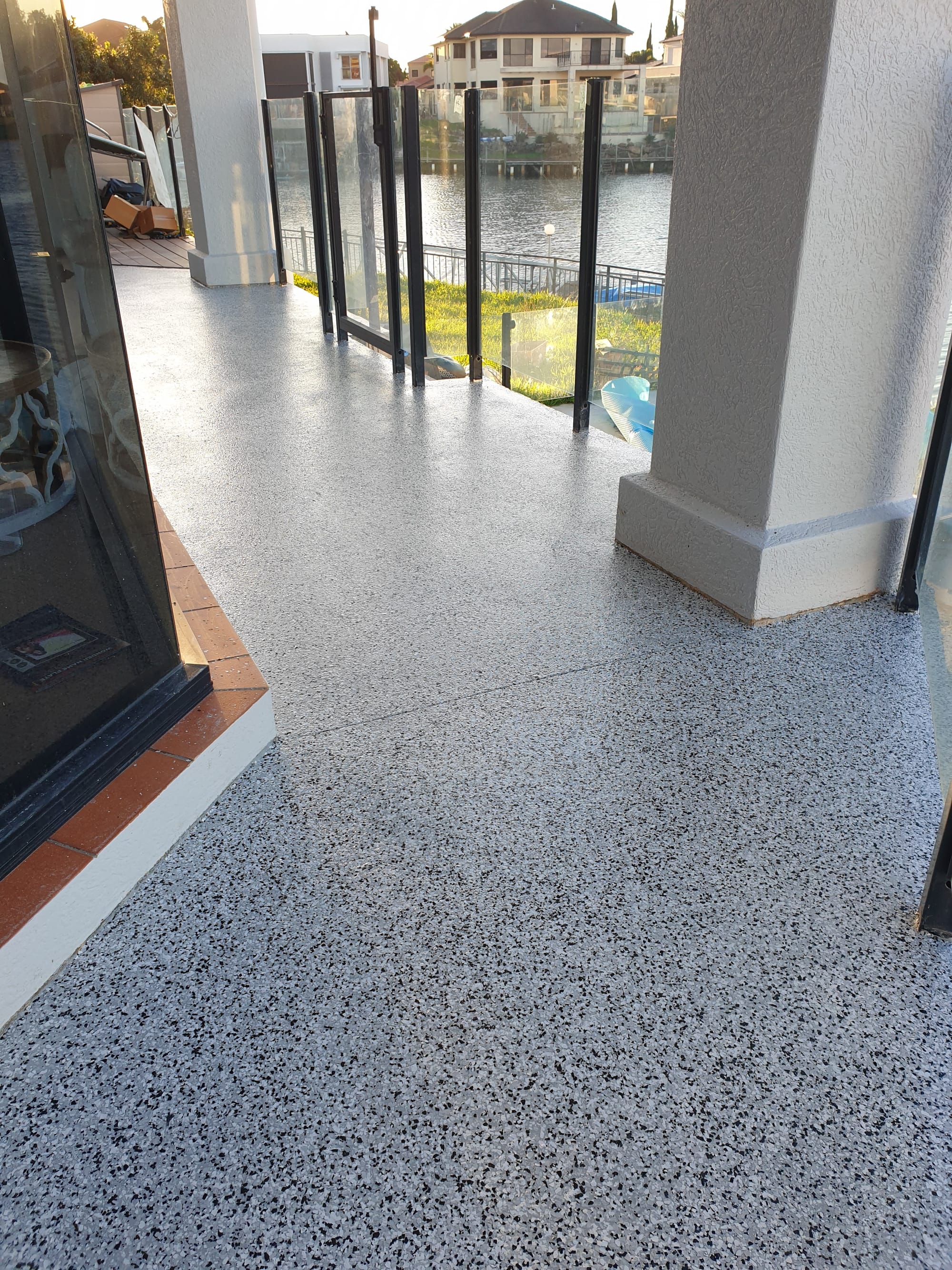
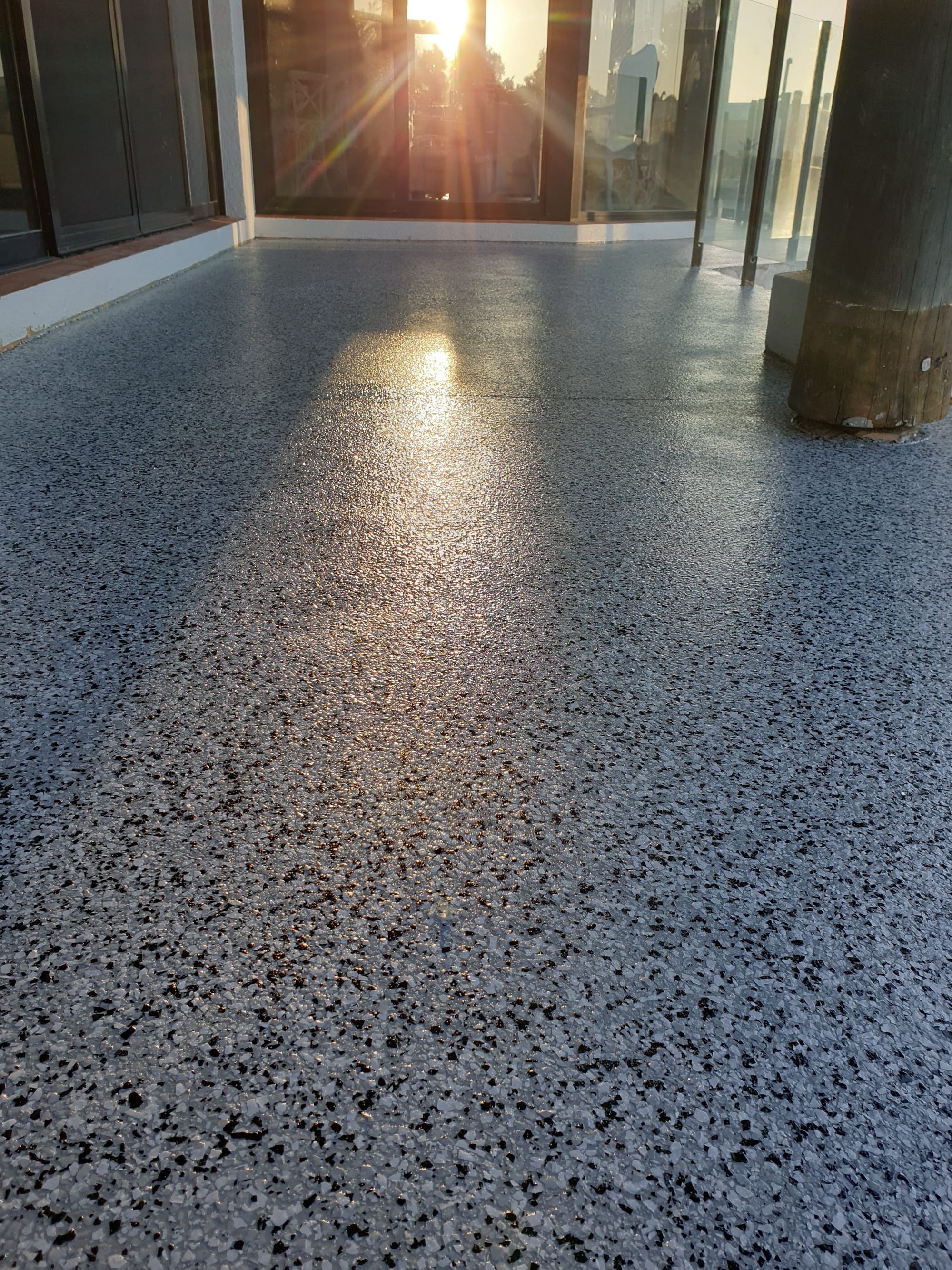
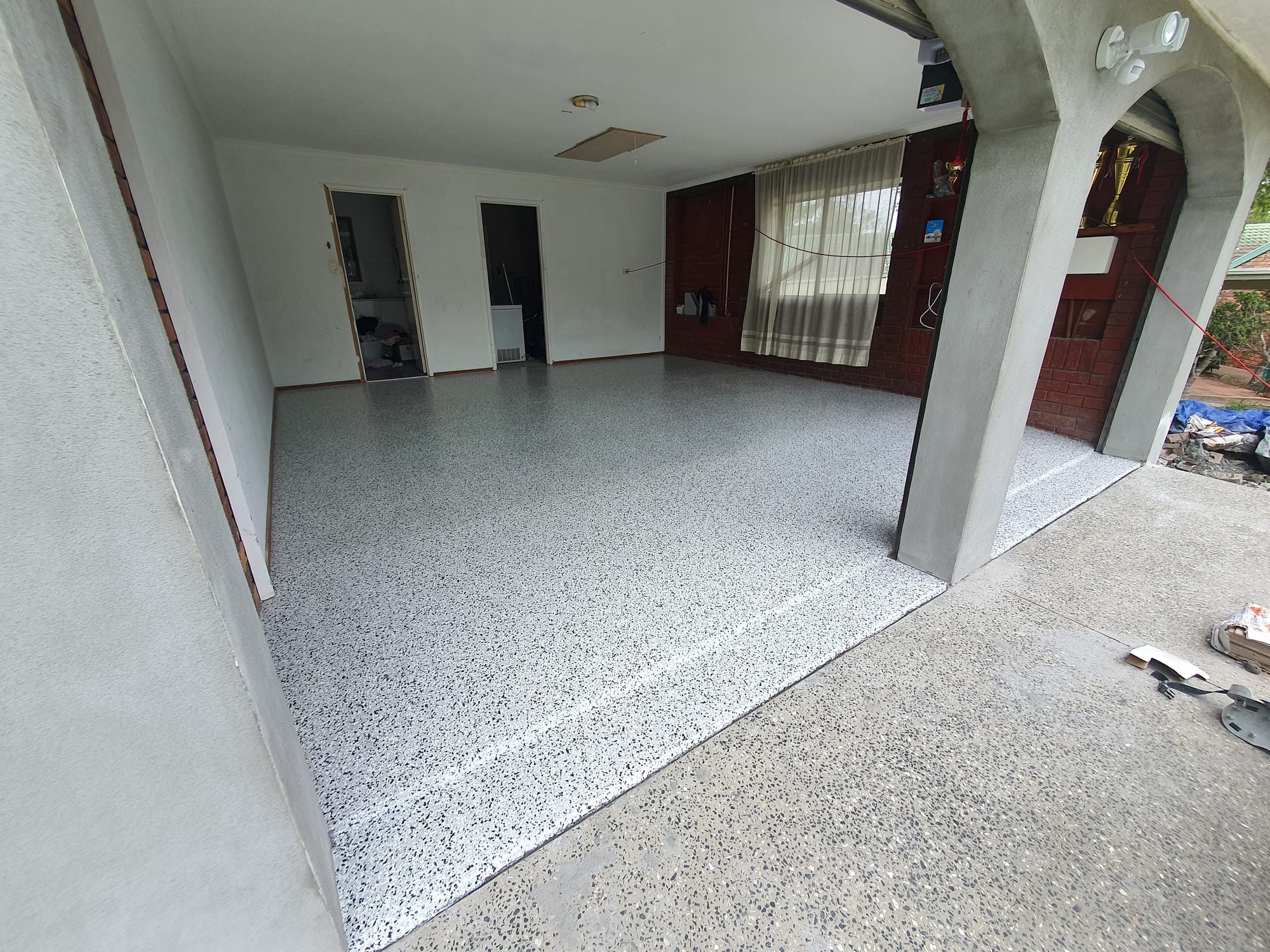
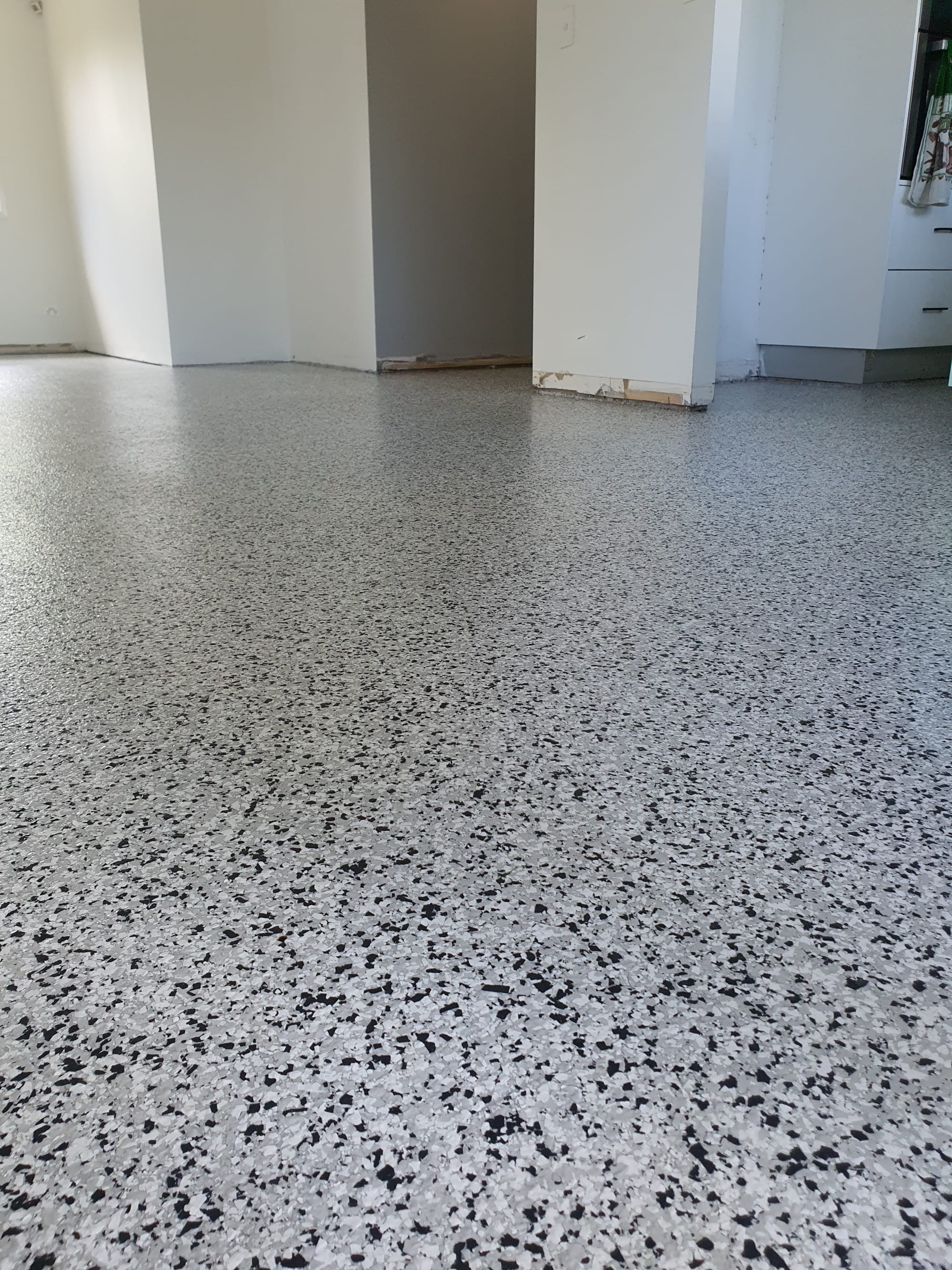
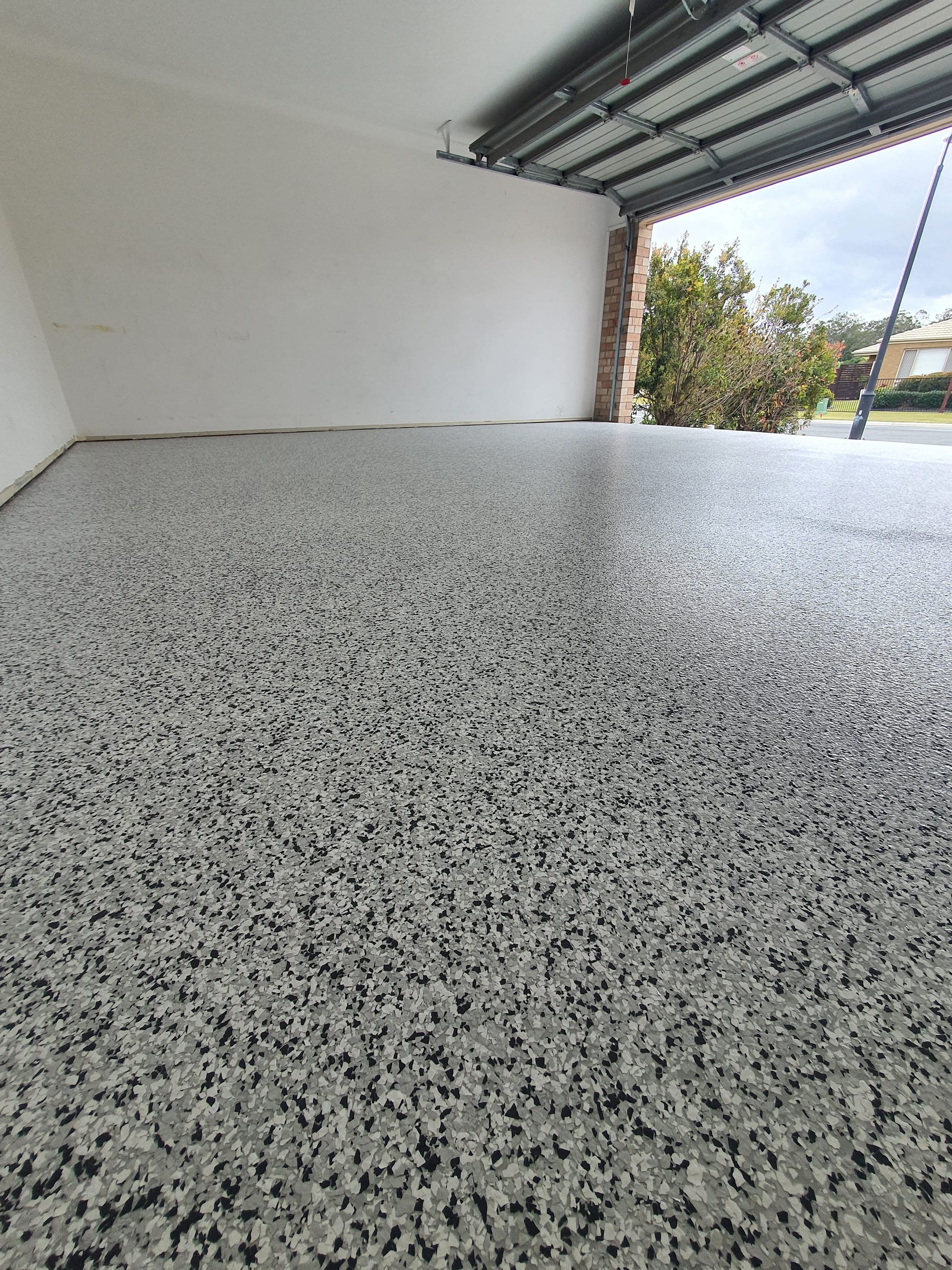
A garage floor cops it all: oil, grease, water, tyres and tools. An epoxy flake floor gives you a tough, seamless, easy-clean surface with a speckled finish that hides dust and marks and looks great. At Grind It, we grind the concrete properly first, because an epoxy floor is only as good as the preparation underneath.
What is an epoxy flake floor?
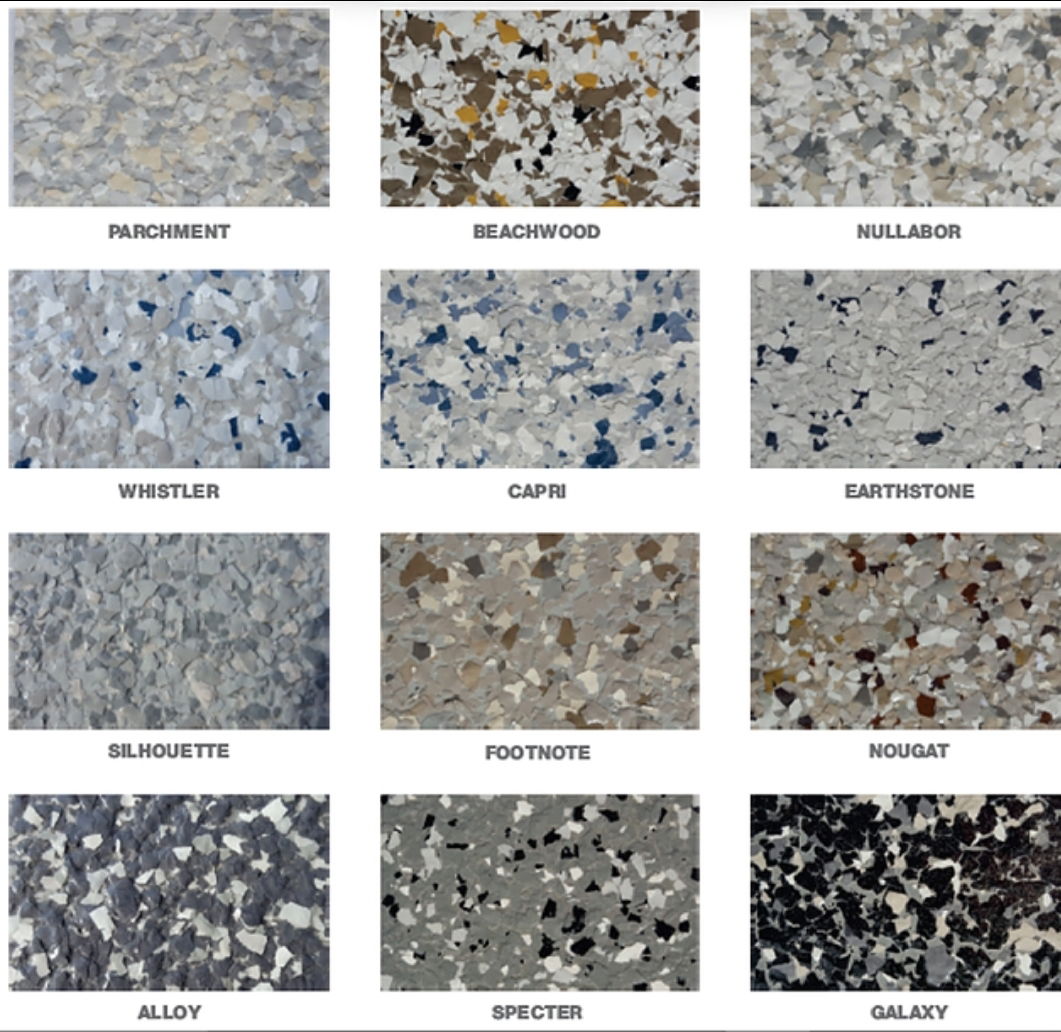
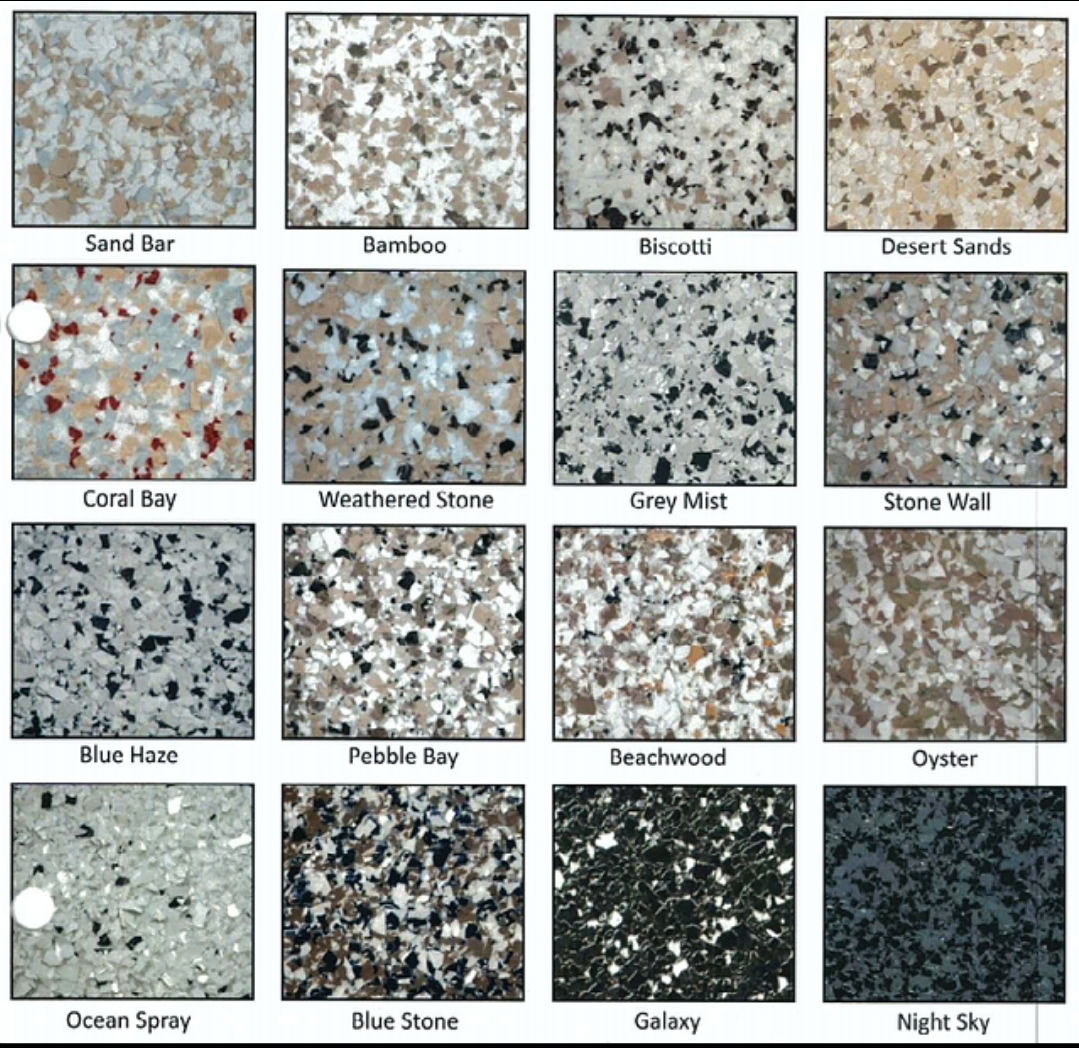
An epoxy flake floor is a coating system bonded to your concrete. A coloured epoxy base coat goes down first. Decorative flakes are then broadcast into it, and a clear topcoat locks it all in. The result is a seamless floor that resists stains and chemicals and wipes clean. We use a water-based epoxy flake system with a range of colour blends to choose from.
Where does it suit?
Epoxy flake is ideal for single and double garages, home workshops, sheds and man caves. It also works in laundries and other indoor areas – we've laid epoxy flake inside homes too – and in commercial spaces such as showrooms and workshops.
Why choose epoxy flake?
It resists oil, grease and many chemicals, and helps reduce concrete staining and tyre marks. It's seamless and easy to sweep and mop. The flake hides dust and small imperfections, and there are plenty of colour options to suit your home.
Our process
- Quote and colour selection – we check the slab and help you choose from the colour chart.
- Diamond grinding – we grind the whole floor to remove the weak top layer and old coatings, and to give the epoxy something to grip.
- Repairs – we fill cracks, holes and damaged joints.
- Base coat and flake – we roll out the epoxy and broadcast the flake.
- Scrape and topcoat – we remove loose flake and apply the clear topcoat.
- Cure and handover – we'll let you know when it's ready to walk on and when you can park on it.
A standard double garage typically takes 2–3 days.
Epoxy flake vs polished or grind and seal garage floors
Not sure which way to go? Epoxy flake is a coating with colour and pattern. Polished concrete and grind and seal show off the natural concrete and stone. Both work well in a garage – we're happy to explain the pros and cons for your slab and budget. Read our blog: What's the Best Coating for a Garage Floor?
Care and maintenance
Sweep regularly and mop with warm water and a mild, pH-neutral cleaner. Clean up oil, fuel and chemical spills promptly. Use a mat or a sheet of plywood under jack stands and heavy, sharp items.
Epoxy flake FAQs
Q: Can you put epoxy over my old garage floor?
A: In most cases, yes. Old paint or coatings need to be ground off first. We'll look at the condition of your slab when we quote and let you know about anything that could affect the result.
Q: How long does it take?
A: A standard double garage typically takes 2–3 days.
Q: How much does an epoxy flake garage floor cost?
A: It depends on the size of the area, the condition of the slab and your chosen finish. Book a free quote and we'll give you an exact price.
Book a quote
Ready for a garage floor you'll be proud of? Book a free quote online or call Brendan on 0403 093 740.
Northern NSW
Polished Concrete, Grind and Seal & Epoxy Floors in Northern NSW
Grind It is based on the northern Gold Coast, and our service area doesn't stop at the border. We provide concrete grinding, polishing, honing and epoxy flooring for homes and businesses across Northern NSW – from Tweed Heads down the coast to Byron Bay and inland to Murwillumbah.
Areas we service in Northern NSW
Tweed Heads, Banora Point, Kingscliff, Cabarita Beach, Pottsville, Murwillumbah, Ocean Shores, Brunswick Heads and Byron Bay – and the areas in between.
Not sure if we come to you? Give us a call – we offer free quotes from Northern NSW to north Brisbane and everywhere in between.
Services available in Northern NSW
Mechanically polished concrete – the concrete itself is polished to matt, satin or high gloss, for new builds and renovations.
Grind and seal – choose your stone exposure, finished with a gloss, satin or matt sealer.
Honed concrete and exposed aggregate – natural, non-glossy finishes for pool surrounds, patios, paths and stairs.
Epoxy flake – tough, seamless garage floors.
Trip hazard grinding – lifted concrete edges ground back flush.
We also do burnished concrete, floor preparation, and wall, block and brick honing.
Coastal living, coastal floors
Life from Tweed Heads down to Byron Bay is lived indoors and out. Sand gets tracked in, the sun is strong and outdoor areas get wet. That affects which finish we recommend.
Outdoors and around pools – honed finishes with a suitable sealer, and non-slip added where needed, give you a natural stone look with better grip than a gloss.
Indoors – polished concrete or grind and seal give a hard-wearing floor that's easy to sweep sand off and suits a relaxed coastal look.
Garages – epoxy flake or a sealed concrete finish handles cars, bikes, boards and gear.
We'll recommend the right sealer for each area, such as UV-stable options for spots in full sun.
How it works
- Get in touch – book a quote online or call 0403 093 740 and tell us about your job.
- Quote – we'll look at the concrete and talk through finishes.
- Book in – we'll lock in a date and explain how to prepare the space.
- The job – we grind, polish or coat, then clean up.
- Handover – we'll explain how to care for your new floor.
Why Grind It?
We're a family owned and operated business based just over the border on the northern Gold Coast. We take on residential and commercial work, with attention to detail and customer-first service – every project is treated like it's our own. And we're happy to take on the small jobs other contractors won't quote.
Northern NSW FAQs
Q: How far south do you travel?
A: We service Northern NSW from Tweed Heads down to Byron Bay, including Ocean Shores and Brunswick Heads.
Q: Can you do small jobs in NSW?
A: Got a small job no one wants to quote? Ask us – we'll let you know straight away if we can help.
Q: How soon can you start?
A: It depends on our booking schedule and, for outdoor work, the weather. Call us for current availability.
Book a quote
Northern NSW concrete floor project? Book a free quote online, call Brendan on 0403 093 740 or email brendan@grinditfloors.com.au.
Trip Hazard Grinding
Concrete Trip Hazard Grinding
Tree roots, settling slabs and old joins can leave raised lips in concrete that catch toes, trolleys and wheelchairs. Instead of cutting out and replacing the concrete, we can often grind the raised edge down to create a smooth, gradual transition – usually a quicker and simpler fix than replacing the slab.
Where it helps
Footpaths, driveways and garden paths at homes. Strata and body corporate common areas. Shops, warehouses, car parks and commercial walkways. Lifted joins in indoor slabs before new flooring goes down.
How it works
- Assess – we look at the height and length of each lip and what's causing it.
- Grind – we use diamond grinders to take the high side down and feather it out.
- Clean up – we clear away the dust and slurry.
- Seal (optional) – freshly ground concrete can be sealed for a more finished look.
Trip hazard FAQs
Q: Will it look patchy?
A: Ground concrete looks different from the weathered concrete around it. It softens over time, and we can seal it if you want a more even look.
Q: Is it a permanent fix?
A: Grinding removes the lip, but if a tree root keeps pushing the slab up, it can lift again. We'll let you know if we think that's likely.
Q: Do you do just one or two spots?
A: Yes. Got a small job no one wants to quote? We'll get it done – fast and professionally.
Book a quote
Got a trip hazard that needs fixing? Book a free quote online or call Brendan on 0403 093 740.